10 Best Iron Ore Crushers for Global Buyers
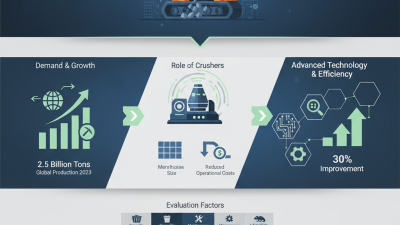
Iron ore remains the foundation of modern steelmaking, but its journey from mine face to blast furnace is never simple. The World Steel Association reported approximately 1.89 billion tonnes of crude steel production in 2023. That scale creates constant pressure for dependable crushing equipment. The USGS Mineral Commodity Summaries 2024 also recorded global iron ore mine production at roughly 2.5 billion tonnes of crude ore. These figures explain why crusher selection deserves more than a catalogue comparison.
An Iron Ore Crushser must handle abrasive rock, changing feed sizes, moisture, and severe operating hours. Jaw crushers often provide robust primary reduction. Gyratory crushers suit high-capacity mines. Cone crushers can deliver tighter secondary sizing. However, capacity alone can mislead buyers. Energy use, liner life, maintenance access, dust control, and local service support may decide the real cost. Dr. Tim Napier-Munn, a respected comminution specialist, stated, “Comminution is the most energy-intensive operation in mineral processing.” The warning is practical. A powerful machine can still become an expensive bottleneck.
This guide examines ten leading crusher options for global buyers. It considers throughput, feed opening, product control, wear protection, automation, and installation conditions. Reports provide useful benchmarks, not perfect answers. Ore hardness changes. Mine layouts differ. Even excellent equipment may underperform with poor feeding or neglected maintenance. That uncomfortable detail matters. Buyers should compare verified test results, lifecycle costs, and regional references before choosing a model. The best crusher is not always the largest one. It is the machine that remains productive beside a dusty haul road, month after month.
Iron Ore Crushing Fundamentals: 62% Fe Grades and 100–300 MPa Strength
Iron ore at 62% Fe is widely valued for its strong metal content and relatively lower gangue burden. However, grade alone does not determine crusher performance. A feed containing 100–300 MPa compressive strength can behave very differently after blasting, especially when moisture, clay, or natural fractures are present.
Hard, abrasive ore usually requires a crushing circuit with controlled reduction and strong wear protection. Primary crushing must accept large run-of-mine rocks without excessive blockage. Secondary crushing should produce a stable feed for screening, grinding, or direct transport.
Operators should monitor feed size, discharge size, power draw, and liner wear every shift. Small changes matter. A few oversized rocks can increase vibration and reduce throughput.
Practical testing remains essential before purchasing equipment. Laboratory strength values may not represent the full mine face. A first estimate is often wrong. Sampling should include fresh ore, weathered sections, and wet material from different benches. Dust control, access for maintenance, spare parts, and safe isolation procedures also affect long-term reliability. A crusher that handles 250 MPa rock on paper may struggle when sticky fines fill its chamber. Engineers should compare actual production targets with tested capacity, not rely only on catalogue figures.
Jaw Crushers for Primary Reduction: 3:1–6:1 Ratios and High Throughput
10 Best Iron Ore Crushers for Global Buyers
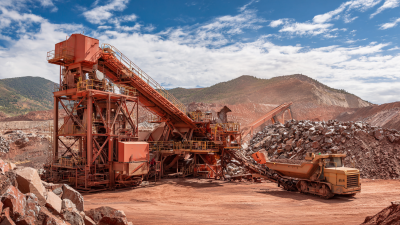
Jaw crushers are the workhorses of primary iron ore reduction. They accept large blasted rocks and create a controlled feed for secondary circuits. The USGS Mineral Commodity Summaries 2025 estimates global iron ore mine production at about 2.5 billion metric tons in 2024. That scale demands dependable first-stage capacity.
A 3:1 to 6:1 reduction ratio is common for primary jaw crushing. For example, a 900-millimetre feed may leave the chamber near 150–300 millimetres. The ratio is a design range, not a promise. Ore hardness, moisture, chamber geometry, and closed-side setting change the result. The SME Mineral Processing and Extractive Metallurgy Handbook stresses that capacity depends on feed characteristics and operating conditions. Throughput should therefore be verified with representative ore, not catalogue figures alone.
Watch the details. A wide inlet reduces bridging risks at the dump pocket. A properly selected setting helps maintain steady tonnes per hour. Scalping wet fines before crushing can prevent packing around the jaw plates. Operators should also inspect liner wear, bearing temperature, and belt loading during trials. Small changes matter.
A specification can still fail.
Global buyers should request test data, power requirements, wear-part consumption, and maintenance access. Abrasive hematite may demand different liners than softer magnetite. Dust control and guarding also affect site readiness. I would treat any fixed throughput claim cautiously, especially when feed size varies between benches. Real ore is rarely as uniform as the spreadsheet suggests.
Gyratory Crushers for Large Mines: Handling 5,000+ t/h Feed Rates
Gyratory Crushers for Large Mines: Handling 5,000+ t/h Feed Rates
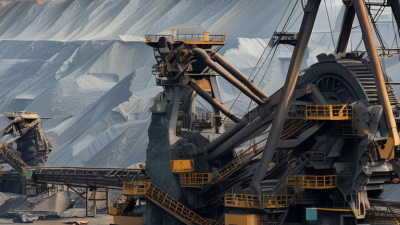
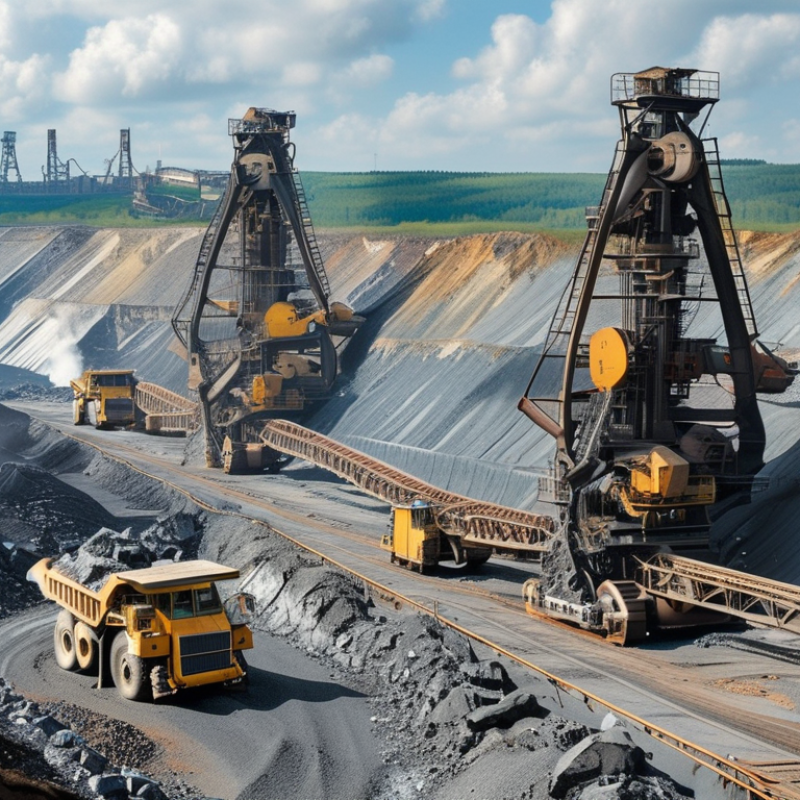
At large iron ore mines, gyratory crushers can process more than 5,000 tonnes per hour when matched with the right feed system. Their deep crushing chambers accept large run-of-mine rocks, reducing the need for extensive upstream sizing. This capacity suits high-volume pit operations, but output depends on ore hardness, moisture, feed gradation, and crusher setting.
A reliable installation starts with a controlled apron feeder. It should deliver a steady, centered stream rather than sudden surges. Choke feeding helps maintain consistent crushing action and reduces uneven wear. Operators should monitor power draw, oil temperature, vibration, and product size from the control room. Small changes matter. A blocked discharge conveyor can stop the entire circuit within minutes.
Maintenance access also deserves serious attention. Large mantle and concave components require lifting plans, safe platforms, and clearly timed shutdowns. Dust suppression protects visibility and equipment, especially during dry iron ore handling. Tramp-metal protection is valuable, though it cannot replace good mine-site control.
A 5,000+ t/h target may look impressive on paper. Real performance often falls short when the ore becomes wet, sticky, or unexpectedly hard. Engineers should test representative samples and review seasonal conditions before final selection. The largest crusher is not always the best choice. Balanced design, measured data, and disciplined operation usually deliver more dependable results.
10 Best Iron Ore Crushers for Global Buyers: Gyratory Crushers for Large Mines
Representative large-mine gyratory crusher feed-rate reference points, showing the 5,000+ t/h operating range used in high-volume iron ore applications.
Values are practical planning reference points within the capacity range commonly associated with large primary gyratory crushing circuits. Actual throughput depends on ore hardness, bulk density, feed size, moisture, closed-side setting, and operating conditions.
Cone Crushers for Secondary Stages: 4:1–6:1 Reduction and Cubic Product
Cone crushers are widely used in secondary iron ore crushing, where controlled reduction matters more than simple throughput. A typical reduction ratio ranges from 4:1 to 6:1. This means a 120 mm feed may produce material near 20–30 mm, depending on the closed-side setting and chamber design. The goal is a well-shaped, cubic product with fewer elongated particles.
Hard iron ore demands careful feed preparation. Oversized lumps can cause uneven loading, while excessive fines may reduce crushing efficiency. Operators should check the feed belt regularly and remove tramp material before it reaches the crushing chamber. A stable, full chamber usually improves particle shape and reduces liner wear. Small setting changes can also affect product size quickly. Measure the discharge, not just the control panel.
In practical operation, moisture creates complications. Wet fines may build up near the discharge area and disturb flow. Temperature, liner condition, and feed hardness also change daily performance. No setting works perfectly for every ore body. I have seen plants chase a tighter product while losing useful capacity. That trade-off needs real sampling and screen analysis. Check the 20–30 mm fraction, inspect particle shape, and compare power draw with hourly production. A cubic product may improve downstream screening, but only when the crusher remains stable under actual site conditions.
10 Best Iron Ore Crushers for Global Buyers - Cone Crushers for Secondary Stages: 4:1–6:1 Reduction and Cubic Product
Representative secondary-stage cone crusher configurations for hard and abrasive iron ore applications.
Typical operating ranges shown for equipment selection. Actual capacity depends on ore competency, moisture, liner profile, closed-side setting, feed gradation and circuit design.
| Rank |
Crusher Configuration |
Reduction Ratio |
Nominal Capacity
(t/h) |
Max. Feed Size
(mm) |
Closed-Side Setting
(mm) |
Motor Power
(kW) |
Approx. Shipping Mass
(t) |
Typical Use |
| 1 |
Large Secondary Cone Crusher |
4:1–5:1 |
350–650 |
250 |
25–50 |
315–450 |
38–55 |
High-volume secondary crushing in open-pit iron ore plants |
| 2 |
Heavy-Duty Medium Cone Crusher |
4:1–6:1 |
250–500 |
210 |
20–45 |
250–355 |
28–42 |
Abrasive ore with controlled product size and steady feed |
| 3 |
High-Reduction Secondary Cone |
5:1–6:1 |
220–420 |
185 |
16–38 |
220–315 |
24–36 |
Applications requiring a high proportion of cubical particles |
| 4 |
Standard Medium Cone Crusher |
4:1–5:1 |
180–350 |
160 |
20–40 |
185–250 |
19–30 |
General-purpose secondary crushing before screening or tertiary crushing |
| 5 |
Compact Secondary Cone Crusher |
4:1–5:1 |
120–260 |
135 |
18–35 |
132–220 |
14–23 |
Small and medium iron ore processing lines with limited installation space |
| 6 |
Short-Head Fine Cone Crusher |
5:1–6:1 |
150–300 |
115 |
12–30 |
160–250 |
18–29 |
Fine secondary duty where a lower downstream feed size is required |
| 7 |
Hydraulic-Adjusted Cone Crusher |
4:1–6:1 |
160–320 |
170 |
18–45 |
200–315 |
22–34 |
Circuits needing fast setting adjustment and overload protection |
| 8 |
High-Pressure Crushing Cone |
4:1–5:1 |
140–280 |
150 |
16–35 |
185–280 |
20–32 |
Hard, dense ore where continuous crushing force and liner life are priorities |
| 9 |
Mobile Secondary Cone Crusher |
4:1–5:1 |
120–240 |
145 |
20–40 |
160–250 |
32–48 |
Temporary mine sites, contract crushing and relocatable processing plants |
| 10 |
Low-Profile Secondary Cone Crusher |
4:1–6:1 |
90–200 |
120 |
15–32 |
110–200 |
12–22 |
Underground or retrofit installations with height and access restrictions |
Comparing 10 Crusher Options by Capacity, Feed Size, Energy, and Maintenance
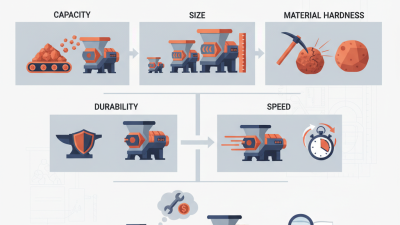
Choosing among ten iron ore crusher options requires more than headline capacity. USGS Mineral Commodity Summaries 2025 estimated global iron ore mine production at about 2.5 billion metric tons in 2024, keeping throughput pressure high. A primary jaw crusher typically handles 100–1,500 tonnes per hour, with feed sizes below 1,200 millimeters. A primary gyratory unit can exceed 5,000 tonnes per hour, but demands deeper foundations and more complex maintenance. Secondary jaw crushers suit smaller plants. Standard and short-head cone crushers usually accept feed below 350 millimeters and produce controlled, finer discharge.
High-pressure grinding rolls can process roughly 200–2,000 tonnes per hour with lower feed sizes, often near 75 millimeters. Their energy advantage is significant. CEEC technical reviews repeatedly identify comminution as a major share of mine-site electricity use, commonly around 30–50%. Vertical-shaft impact crushers offer shaping and tertiary reduction, while horizontal impact crushers handle softer, less abrasive ore. Mobile jaw and mobile cone units reduce civil work, but their fuel use and relocation downtime deserve careful checking.
Indicative crushing energy may range from 0.5 to 3.0 kilowatt-hours per tonne, depending on hardness, moisture, and reduction ratio. These figures are not promises. Abrasive magnetite can shorten liners quickly. Jaw systems need simpler servicing; gyratory and cone systems require more specialized inspections. I would not rank one option universally as “best.” A neglected maintenance schedule can erase an efficient machine’s advantage within months. Feed testing, liner-life records, and measured power data should outweigh catalogue capacity.