How to Choose the Best Slag Crusher for Your Business Needs?
As industries look for efficient ways to manage waste, the significance of a quality Slag Crusher cannot be overstated. According to John Harris, a leading expert in material processing, “Choosing the right Slag Crusher is the backbone of effective waste management.” This highlights the need for companies to understand their specific requirements before making a decision.
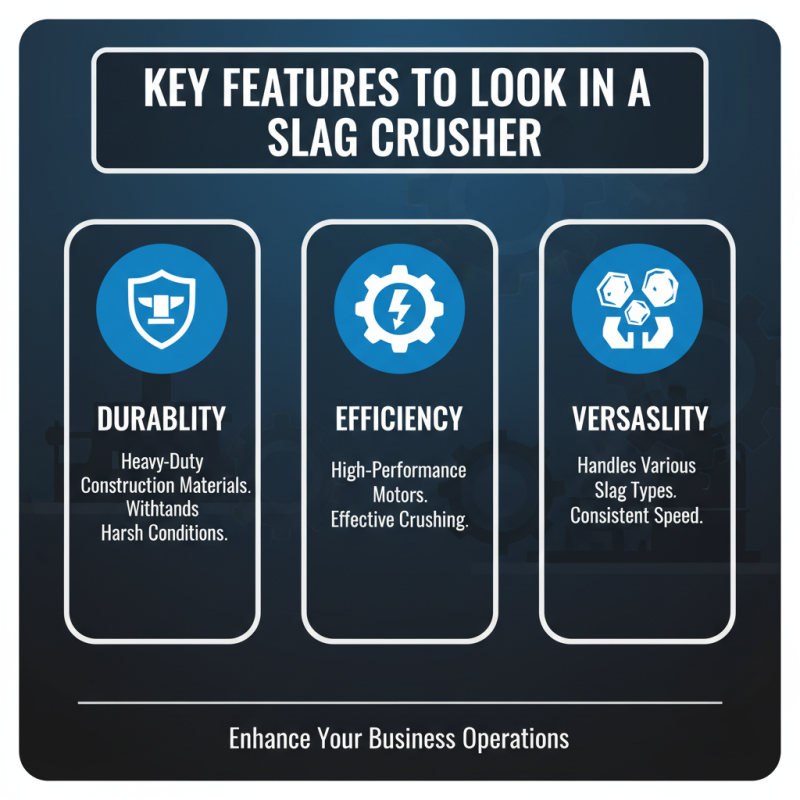
When selecting a Slag Crusher, factors such as performance, durability, and maintenance play crucial roles. Different industries might have unique needs, making it important to analyze each option carefully. For instance, a heavy-duty crusher may be necessary for steel production, while a more compact model could suffice for smaller operations.
Potential buyers often overlook the importance of after-sales support. An expert can provide valuable insights into performance history and reliability. Understanding both the benefits and shortcomings of each model is essential. Reflecting on past experiences in the industry can guide future choices, ensuring the Slag Crusher purchased meets both present and future business challenges.
Understanding the Different Types of Slag Crushers Available
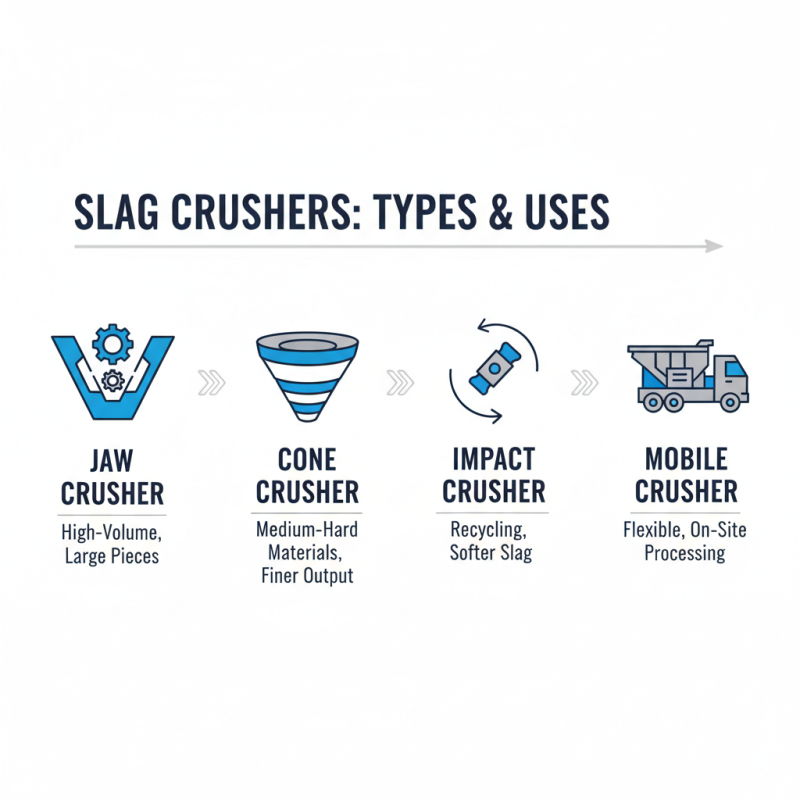
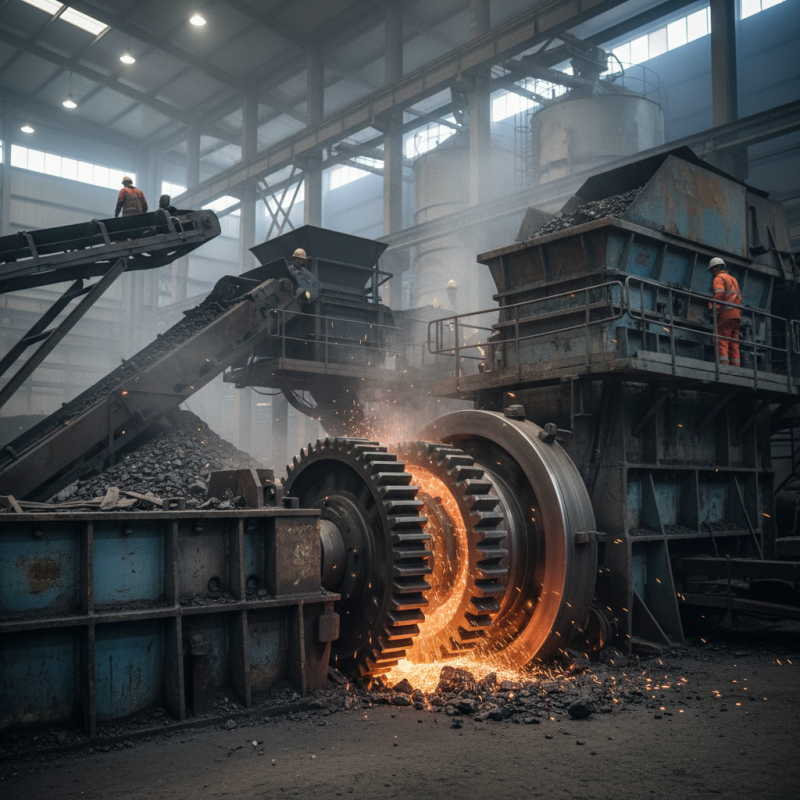
When it comes to slag crushers, understanding the different types available is crucial. There are primarily four main types: jaw crushers, cone crushers, impact crushers, and mobile crushers. Each type has unique features that fit various business needs. For instance, jaw crushers are ideal for high-volume operations. They break down large slag pieces efficiently. This efficiency can significantly impact production times and costs.
Cone crushers, on the other hand, excel in secondary crushing. They produce a consistent particle size which is vital for many industries. If your operation requires portability, mobile crushers are a compelling option. They can be easily transported to various locations, providing flexibility. However, they may not handle heavy-duty tasks as effectively.
In your selection process, consider your specific requirements. Reflect on processing volume, desired particle size, and mobility needs. Each type has pros and cons. For example, while jaw crushers offer high efficiency, they may require more maintenance. Analyzing these aspects will help in making informed decisions. Balancing performance with cost-effectiveness is key to choosing the right slag crusher for your business.
Evaluating Your Business Requirements for Slag Processing
When evaluating your business requirements for slag processing, the first step is understanding the type and volume of slag generated. Different industries produce various types of slag, which can impact the choice of equipment. You need to consider how often you process slag and the desired end product. This information shapes the efficiency and capacity needed from a slag crusher.
Next, assess your operational workflow. Will the slag crusher be used alongside existing machinery? Understanding the integration point can save time and costs. Efficiency is crucial, but so is reliability. Look for equipment that offers consistent performance over time, even if it means higher initial costs. Clarifying these aspects helps in making an informed decision.
Lastly, think about maintenance and support. A reliable supplier will offer guidance during the selection process. They can provide insights on common issues and maintenance needs. Remember, operational needs can change, so flexibility in choosing the right equipment is important. It’s essential to have a clear vision of your long-term goals for slag processing.
Slag Crusher Selection: Evaluating Business Needs
Assessing Cost-Effectiveness and Return on Investment
Choosing the right slag crusher bridges the gap between cost and productivity. A thorough assessment of cost-effectiveness is crucial. Examine not just the initial purchase price but also maintenance costs and operational efficiencies. Over time, a low upfront cost can lead to higher expenditures.
Tips: Consider a total cost of ownership (TCO) model. This includes parts, support, and energy consumption.
Return on investment (ROI) matters significantly. Analyze how quickly the equipment can pay for itself through enhanced output. Tools that offer better throughput often translate to reduced processing times. This translates to less labor and energy costs.
Tips: Seek out performance metrics from past users. Real-world feedback provides insights into long-term reliability.
The goal is to strike a balance between upfront expenditure and long-term gains. Be wary of options that seem too cheap; they may require costly repairs. Ultimately, the right choice will yield more sustainable growth for your business.
Maintenance and Support Considerations for Slag Crushers
When selecting a slag crusher, maintenance and support considerations play a critical role. Regular maintenance is essential for ensuring optimal performance and longevity. According to a recent industry report, poorly maintained equipment can decrease efficiency by up to 30%. Ensuring routine inspections and timely repairs can mitigate unexpected breakdowns.
Operators often overlook the importance of reliable support services post-purchase. A research study showed that 45% of equipment failures stemmed from lack of proper training and inadequate support. Therefore, businesses should evaluate suppliers based on their support offerings. Comprehensive service agreements can include training, technical support, and access to spare parts.
Another key factor is the availability of documentation. Maintenance manuals and online resources should be readily accessible. This transparency fosters better understanding and quicker resolution of issues. Additionally, consider using data analytics to monitor performance trends. Such insights can reveal hidden inefficiencies or potential maintenance needs. Balancing reliable equipment with a solid support system can lead to improved operational success.
How to Choose the Best Slag Crusher for Your Business Needs? - Maintenance and Support Considerations for Slag Crushers
| Criteria |
Description |
Importance |
Recommendation |
| Crusher Type |
Different types of slag crushers are available, including impact, jaw, and cone crushers. |
High |
Assess the type of slag produced to select the most suitable crusher. |
| Processing Capacity |
Understanding the volume of slag generated daily is crucial for choosing a crusher with the right capacity. |
Very High |
Evaluate your business needs to match the crusher's capacity. |
| Maintenance Requirements |
Regular maintenance is required to ensure performance and longevity of the machine. |
High |
Choose models with easily accessible parts for maintenance. |
| Support and Service |
Consider the availability of technical support and spare parts from suppliers. |
Critical |
Research suppliers with strong service histories. |
| Cost |
Initial purchase cost and ongoing operational costs should be considered. |
Medium |
Balance quality and cost for optimal ROI. |