How to Choose the Right Rock Crusher for Your Project?
Choosing the right Rock Crusher for your project can be a daunting task. The industry is vast, with various choices available based on project needs. According to the National Stone, Sand & Gravel Association, the demand for aggregate production is expected to grow by 3.4% annually over the next five years. Understanding your specific requirements is crucial.
Expert insights can also guide your decision. Mark Stevens, a well-known figure in the Rock Crusher industry, once stated, "Selecting the right crusher is key to your project's success." His experience highlights the importance of matching the crusher type to the material and project scale. A wrong choice may lead to inefficiency, unnecessary costs, and project delays.
Furthermore, considering factors such as material type, size reduction ratio, and desired output volume is essential. Each project presents unique challenges, and reflections on past decisions can provide valuable lessons. It’s not just about purchasing a Rock Crusher; it’s about ensuring it aligns with your operational goals.
Understanding the Different Types of Rock Crushers Available
When choosing a rock crusher, understanding the types available is crucial. Jaw crushers are one popular option. They excel at breaking large rocks into manageable pieces. According to industry reports, jaw crushers can handle materials with compressive strength up to 320 MPa. This makes them ideal for primary crushing tasks.
Another type is the cone crusher. These are designed for finer crushing. They work well for medium to hard materials. The output size can be adjusted easily, which adds versatility. Research indicates that cone crushers can increase production efficiency by 30%. However, they require more maintenance than other types.
Impact crushers are also worth considering. They are perfect for producing high-quality aggregates. They create a cubical shape, which is often required for construction materials. Yet, they may not perform well with harder rocks. Misjudgments in selecting the wrong type of crusher can lead to increased costs and damaged equipment. Always evaluate the specific needs of your project thoroughly before making a choice.
How to Choose the Right Rock Crusher for Your Project?
| Crusher Type |
Best Use Case |
Particle Size Reduction |
Maintenance Level |
| Jaw Crusher |
Primary crushing of larger rocks |
Large reduction ratio |
Low maintenance |
| Cone Crusher |
Secondary crushing for mid-sized rocks |
Medium reduction ratio |
Moderate maintenance |
| Impact Crusher |
Crushing softer materials |
Variable reduction ratio |
High maintenance |
| Hammer Mill |
Fine crushing of soft materials |
Fine reduction |
Moderate to high maintenance |
| Roll Crusher |
Crushing sticky or wet materials |
Low reduction ratio |
Low maintenance |
Evaluating Your Project's Specific Crushing Needs and Requirements
Choosing the right rock crusher starts with understanding your project's specific needs. Each project demands unique crushing capabilities based on material type and desired output size. For example, a study from the National Stone, Sand & Gravel Association indicates that 70% of construction aggregates require specific particle sizes for optimal performance. This highlights the importance of tailoring your crusher selection.
Consider factors such as material hardness and moisture content. A source from the U.S. Geological Survey notes that harder materials may require more robust equipment. If you are working with softer materials, you could opt for a simpler, lighter machine. Weight can impact not only efficiency but also transport costs. It is essential to balance durability and practicality.
Noise and dust are critical environmental concerns. A report by the EPA suggests that certain crushing techniques can reduce sound emissions by 50%. However, managing dust often requires additional systems which can increase complexity. Projects often overlook these aspects, neglecting the pressing need for compliance with local regulations. Evaluating noise and dust can be as crucial as assessing performance capabilities.
Key Factors to Consider When Selecting a Rock Crusher
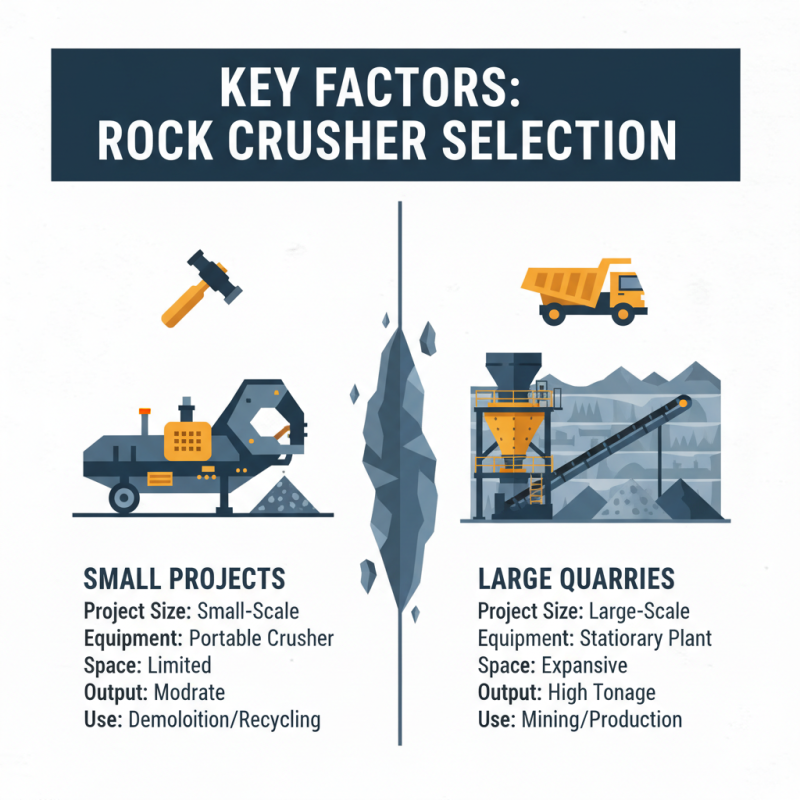
Choosing the right rock crusher requires careful consideration of several key factors. The project's size and scope are critical. A small project may only need a portable model for limited space. A large quarry, however, requires a robust, stationary unit capable of processing tons of material daily.
Material type also plays a significant role. Different rock types call for different crushing methods. Granite is hard and may need a specific design to handle it effectively. Conversely, softer materials can be crushed with less powerful machines. Evaluating the material types ahead of time can save time and resources.
Pay attention to production requirements. How much material do you need to process? Assess your output goals accurately to avoid overpaying for an unnecessarily powerful machine. Additionally, maintenance is another concern. Some machines require more upkeep than others, which can affect operational costs. Reflect on your budget vs. the time you can invest in maintenance to ensure long-term efficiency.
Assessing the Long-Term Costs and Maintenance of Rock Crushers
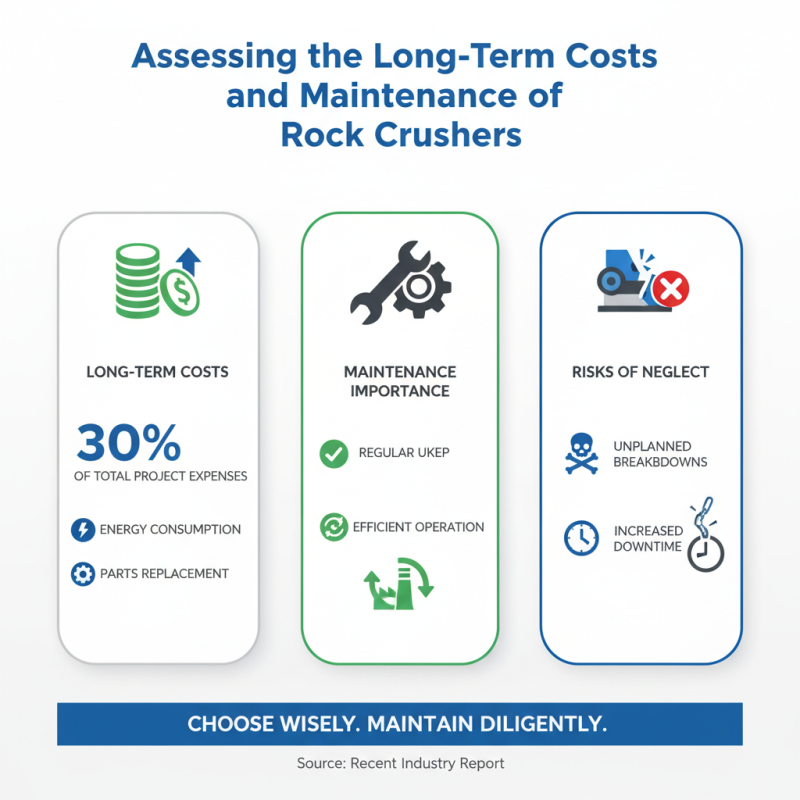
When choosing a rock crusher, consider long-term costs and maintenance carefully. A recent industry report indicates that operational costs can be as high as 30% of total project expenses. This figure often comes from energy consumption and parts replacement. Regular maintenance is essential to keep equipment running efficiently. Neglecting this can lead to unplanned breakdowns.
Maintenance overall can be costly. For example, a crusher may require new parts every few months. These replacements can quickly escalate the budget. Operators should plan for annual inspections to assess wear and tear. In a survey, 40% of companies reported losing productivity due to inadequate maintenance. This highlights the need to invest time and resources wisely.
Furthermore, consider the cost of downtime. A malfunctioning crusher can halt operations for days. This not only affects profits but also delays project timelines. Addressing these long-term costs is vital for project success. Investing in higher-quality crushers may yield better returns. However, the initial cost may deter some buyers. Balancing upfront costs with potential savings is crucial in making a decision.
Making an Informed Decision: Comparing Features and Performance
Choosing the right rock crusher requires a deep understanding of your project needs. Not all crushers are built equally, and performance varies significantly. A recent industry report shows that jaw crushers typically perform better on larger chunks of material. They excel at crushing harder types of rock, achieving compressive strengths of up to 200 MPa. This might be vital for projects needing tougher aggregate.
On the other hand, cone crushers are better suited for medium to fine crushing. Their design allows for a more controlled output, which is crucial for projects that require uniform particle size. Depending on the material, the reduction ratio in cone crushers can average between 4:1 and 6:1. However, they can struggle with softer materials, occasionally leading to inefficient operations.
Cost is another aspect to weigh. Initial costs can be misleading. Maintenance and energy consumption are often overlooked. Some users report that impact crushers, while slightly cheaper upfront, can incur higher operating costs. Performing a thorough analysis, including lifecycle costs, is essential. Ultimately, comparing key features and performance metrics will lead to a more informed decision for your specific project needs.