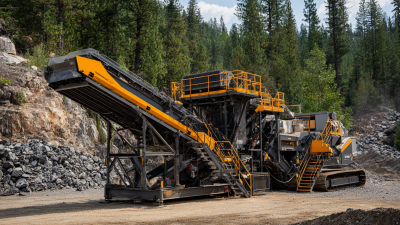
What is a Granite Crusher and How Does It Work?
Granite crushers play a vital role in the aggregate industry. They are used to break down hard granite rocks into smaller, manageable sizes. According to a report by the International Society of Aggregate Producers, the demand for granite aggregates is expected to grow by 5% annually. This reflects the increasing need for construction materials.
Dr. Sarah Collins, a renowned expert in mining technology, states, "Granite crushers are essential for efficient material processing." Her insights highlight the importance of understanding how these machines operate. Basic components like jaws, cones, and impactors define their performance. However, users often overlook the maintenance needed to ensure optimum efficiency.
Operating a granite crusher can be complex. Misunderstanding can lead to operational delays and increased costs. The balance between throughput and particle size is crucial. Without this insight, the entire production process may suffer. This reveals a gap in knowledge that industry players must address.
What is Granite and Its Geological Formation?
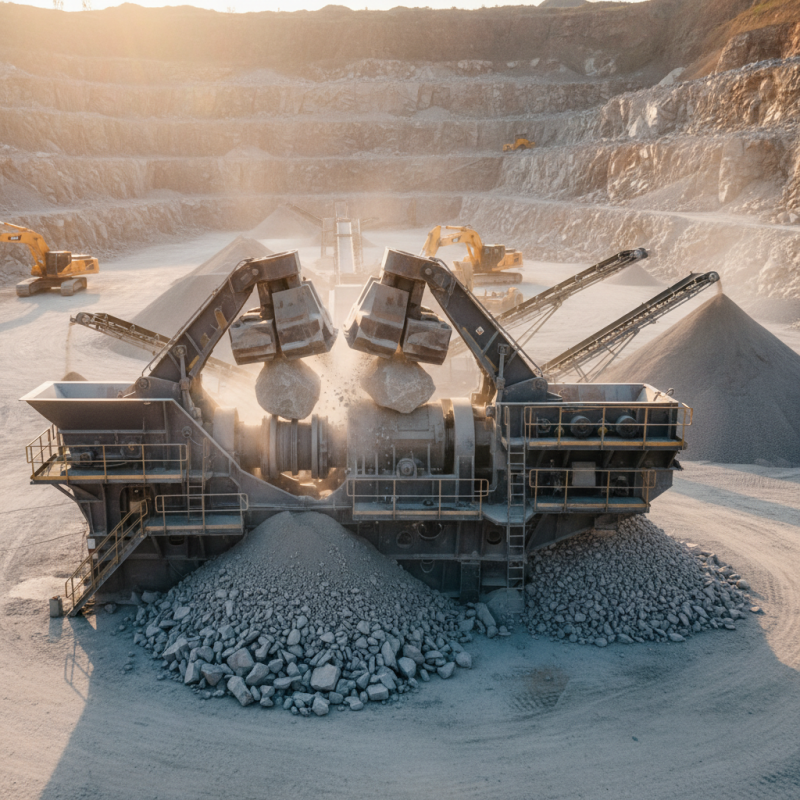
Granite is an igneous rock. It forms from cooled magma deep within the Earth. This process takes millions of years. As magma cools, it crystallizes. These crystals are mainly quartz, feldspar, and mica. The unique blend gives granite its strength and durability. Granite can have various colors. This depends on the mineral composition. It often has a speckled appearance, making it popular for countertops.
Understanding granite's formation helps appreciate its qualities. Scientists study granite to learn more about the Earth's history. This rock holds valuable information about geological processes. However, stripping it from the Earth can disrupt local ecosystems. Careful consideration is needed when quarrying granite.
Tips: If you are interested in purchasing granite, consider its origin. Look for sustainable sources. Think about how extraction affects the environment. Ask questions to understand its journey from rock to market. Reflections on granite can open pathways to responsible choices in construction and design.
Understanding the Role of Crushers in Mining and Construction
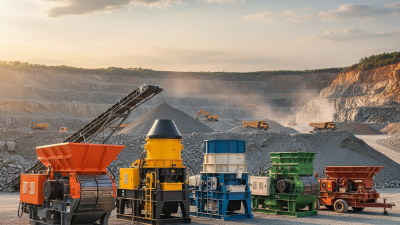
Crushers play a vital role in mining and construction industries. They break down large rocks into smaller, manageable pieces. This process is essential for creating raw materials needed for various construction projects. For instance, granite crushers are primarily used to process granite. Their design allows them to handle hard materials, making them indispensable.
Understanding how crushers work helps in optimizing their use. They utilize mechanical force to crush the rocks, which can be adjusted based on the desired size of the output. Although this process seems straightforward, it's not always perfect. Some materials may not be crushed evenly, leading to variations in size. Operators must frequently adjust settings to maintain efficiency.
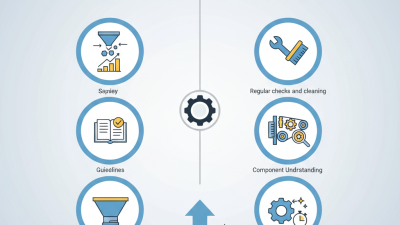
**Tip:** Regular maintenance of crushers can prevent breakdowns. This ensures consistent performance and longevity. Always check for wear and tear on parts.
In construction, the material generated needs to meet specific standards. Inadequate processing can result in poor-quality aggregates. This highlights the importance of conducting quality checks regularly. Staying attuned to these factors can enhance project outcomes and reduce waste. Keeping records of material sizes is also a good practice.
Granite Crusher Production Data
Types of Granite Crushers and Their Specific Functions
Granite crushers are essential machines for processing granite materials. There are several types, each with specific functions. Jaw crushers are among the most common. They crush granite by applying compressive force between two plates. This process results in large crushed particles suitable for various uses.
Another type is the cone crusher. These machines crush granite using a rotating cone. The granite is fed into the top and is crushed between the cone and the walls. This type is great for producing smaller, more uniform granite pieces. However, they can sometimes be inefficient if the granite is too hard or abrasive.
Impact crushers are also effective. They work by using high-speed impacts to break down granite. They create finer granules but may be less efficient in producing larger aggregates. Each type of granite crusher has its pros and cons. Some may struggle with tougher materials, while others might not operate efficiently in all conditions. Understanding these specifics can lead to more effective granite processing.
What is a Granite Crusher and How Does It Work?
| Type of Granite Crusher |
Function |
Crushing Mechanism |
Best Applications |
| Jaw Crusher |
Primary crushing of granite stones |
Uses a compressive force to break down materials |
Quarries, recycling materials |
| Cone Crusher |
Secondary and tertiary crushing |
Employs a rotating cone that crushes granite |
Aggregates production, mining operations |
| Impact Crusher |
Production of fine aggregates |
Utilizes high-speed impact to fracture materials |
Construction, asphalt production |
| Hammer Crusher |
Crushing of brittle materials |
Employs hammers to crush stones |
Mining, building materials |
How a Granite Crusher Operates: Mechanism and Process
Granite crushers are crucial in the construction and mining industries. They transform granite, a hard stone, into smaller, usable materials. Understanding how they operate can shed light on their significance.
The mechanism of a granite crusher involves several components. Initially, large granite pieces are fed into the machine. It includes a jaw crusher that breaks down the stone through a compressive force. This allows the granite to be crushed into manageable sizes. The crushed material then moves to a cone crusher. Here, it further reduces in size, achieving the desired granularity. According to industry data, the efficiency of crushers can reach over 90% when properly maintained. Regular inspections minimize downtime and increase productivity.
However, there are challenges. Oversizing of materials can lead to equipment strain. A study highlighted that improper feeding could reduce a machine's life span significantly. Operators must remain diligent about machine settings and feed size. Even the most advanced granite crushers require consistent monitoring. Neglecting these details may result in costly repairs or inefficient operation. This highlights the need for ongoing training and awareness in the field.
Applications of Granite Crushers in Various Industries
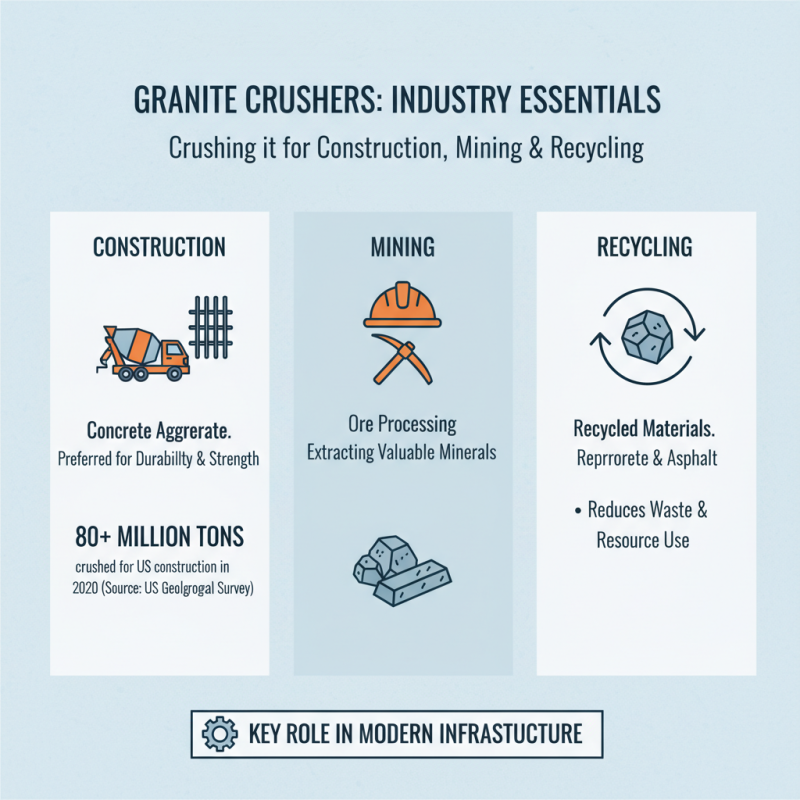
Granite crushers play a pivotal role in various industries. They are essential in construction, mining, and even recycling. In the construction sector, crushed granite is a preferred aggregate for producing concrete. According to the U.S. Geological Survey, in 2020, over 80 million tons of granite were crushed for construction purposes. The durability and strength of granite make it ideal for this use.
In mining, granite crushers are used to extract valuable minerals. They break down the rock, allowing for easier extraction. This process increases efficiency but can have environmental repercussions. Over-mining and equipment wear can lead to sustainability concerns. The industry must balance productivity and environmental responsibility.
**Tip:** Invest in regular maintenance of granite crushers. This ensures efficiency and longevity. Neglected equipment can lead to higher operational costs and delays.
Granite is also utilized in the monumental and decorative stone market. It is employed for memorials, countertops, and other aesthetic uses. The demand for decorative granite has surged, with the stone market expecting growth at a rate of about 5% annually. Yet, reliance on natural resources calls for reflection. Unsustainable extraction practices could harm the environment and future supplies.