Choosing the right Mineral Crusher is not a simple matter of comparing horsepower, feed size, and price. The correct machine must match the ore’s hardness, abrasiveness, moisture, feed distribution, and required product size. A crusher that performs well in dry limestone may struggle with sticky clay or highly abrasive granite. The details matter.
Professor Tim Napier-Munn, a respected mineral-processing specialist, wrote, “The best test of a model is how well it predicts the future.” This principle also applies to crusher selection. Buyers should study expected throughput, liner wear, energy consumption, maintenance access, and the plant’s future expansion plans. A jaw crusher may suit primary reduction, while a cone crusher can provide controlled secondary or tertiary shaping. Impact crushers may deliver excellent cubic products, but their wear costs can rise sharply with abrasive feed.
Real experience often exposes weaknesses that brochures hide. Walk around the proposed installation. Check the discharge area, dust-control points, inspection doors, and space for changing liners. Ask operators how quickly common parts arrive. Ask for site references using similar minerals, not merely similar tonnage.
There is no perfect choice.
Laboratory tests and pilot trials improve confidence, yet they cannot reproduce every field condition. Seasonal moisture, uneven blasting, and inexperienced operation may change results. A careful decision therefore combines engineering data with practical observation. This guide examines those factors, helping readers select a Mineral Crusher that remains productive, serviceable, and financially sensible over its working life.
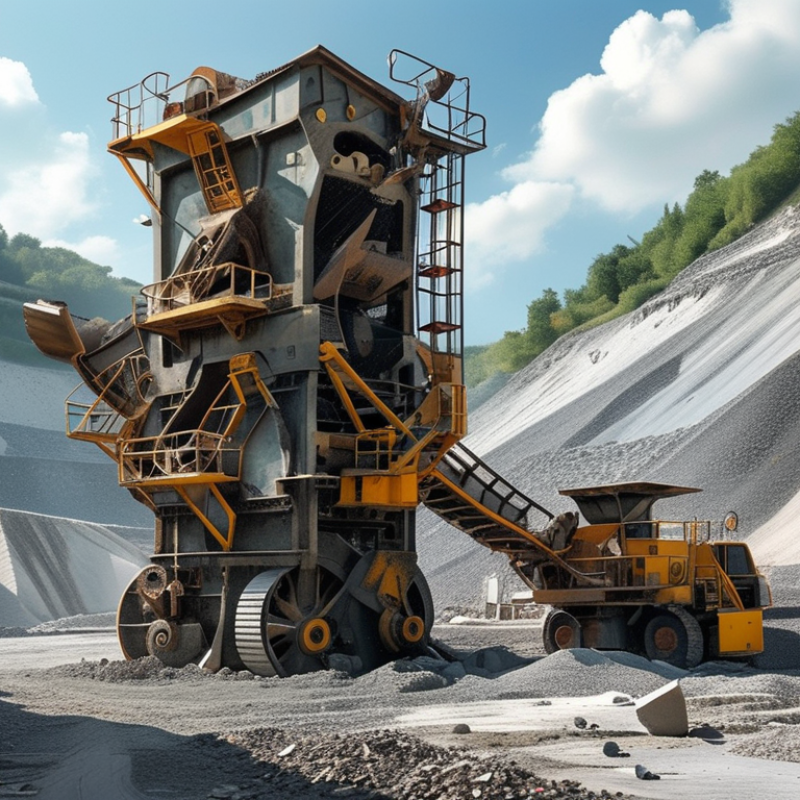
Understanding the mineral is the real starting point. Granite, limestone, gypsum, and iron ore behave differently under pressure. Hardness affects crushing force, while abrasiveness controls wear on liners and other contact surfaces. Moisture matters too. Clay-rich ore may stick inside a crusher and reduce consistent feeding.
A jaw crusher often suits large, hard feed because it handles primary size reduction well. A cone crusher can produce a more uniform product from already-broken, abrasive rock. Softer minerals may work better with impact crushing, especially when particle shape matters. However, impact equipment can create excessive fines in some materials. The target output size, feed size, and required capacity must be checked together.
In field assessments, I examine a fresh sample, record its moisture, and inspect the largest pieces. Laboratory tests can estimate compressive strength and abrasiveness, but a small sample may not represent the whole deposit. That is an easy mistake to make. Operators should also review maintenance access, dust control, energy use, and expected wear costs. A crusher that meets today’s capacity may struggle after the feed changes seasonally. Trial crushing is valuable when the mineral contains mixed layers or unexpected clay. Keep the decision evidence-based, but leave room to revise it.
Choosing a mineral crusher begins with the material, not the equipment catalogue. Hard, abrasive ore usually suits compression crushing, such as jaw or cone designs. These machines handle high compressive strength and reduce impact damage to working surfaces. Softer stone may respond better to impact crushing, especially when a cubical product is required.
Moisture changes the decision. Wet, clay-rich feed can pack inside narrow chambers and reduce capacity. A wider feed opening, stronger clearing action, or staged screening may help. Sticky material needs careful testing. It can defeat an otherwise suitable crusher. Feed size matters too. Large run-of-mine rocks require a primary crusher with generous opening dimensions. Smaller products may need a secondary or tertiary design with precise setting control.
Abrasiveness deserves practical attention. Quartz-rich ore can wear liners quickly, even when production targets look modest. Operators should inspect worn surfaces, record product size, and compare power use during real shifts. Laboratory tests provide guidance, but field conditions often expose surprises. I have seen a theoretically efficient choice struggle with changing moisture and uneven feed. That mistake was useful, but expensive. Dust, noise, maintenance access, and available electricity also influence the final selection. A crusher that matches the ore on paper may still perform poorly beside an unreliable conveyor or poorly adjusted screen.
Choosing a mineral crusher starts with three connected measurements: capacity, output size, and reduction ratio. Capacity usually means tonnes per hour, but the rated figure is not a guarantee. Hardness, moisture, feed consistency, and maintenance can reduce real production. A crusher rated for 100 tonnes per hour may process less when the feed becomes wet and sticky.
Output size should match the next processing stage. Measure the target product carefully, not by visual judgment. A narrow discharge setting can produce smaller particles, but it may also increase power use and wear. Screens can control the final size more consistently. Keep room for variation. Real feed material rarely behaves perfectly.
Reduction ratio compares the largest feed size with the desired product size. For example, reducing 600-millimeter rocks to 100-millimeter pieces requires a 6:1 ratio. A high ratio in one pass may create excessive fines and uneven wear.
I once treated a stated capacity as a promise; that was too simple. Trial testing would have revealed the difference.
Check product gradation, motor load, and oversize during testing. Ask for operating data under conditions close to your site. A crusher that looks powerful on paper may struggle with your actual ore. Maintenance access matters, too. A few minutes saved during inspection can protect daily throughput.
Choosing a mineral crusher starts with the material, but operating economics often decide the purchase. In my field observations, a machine processing 180 tonnes per hour may consume far more power when feed size is inconsistent. A jaw crusher typically handles coarse rock efficiently, while a cone crusher needs steadier feed and closer control. Check motor load during a full shift, not only the rated figure. That detail matters.
Energy use is only one line on the bill. A crusher running near capacity may be efficient per tonne, yet frequent stoppages can erase that advantage. Track kilowatt-hours per tonne, fuel use, belt slippage, and idle time for at least two weeks. Maintenance records should show liner life, bearing temperature, lubrication intervals, and hours spent replacing wear parts. Small delays become expensive quickly. Dust, vibration, and poor alignment often increase costs before operators notice the cause.
Operating cost calculations should include labor, spare parts, inspections, and lost production. Request service data from comparable sites, then test the numbers against your stone hardness and moisture. A low purchase price can hide difficult access to wear components. I have seen estimates fail because they assumed perfect feed conditions. That assumption deserves challenge. Leave room for seasonal changes, inexperienced operators, and emergency repairs. The cheapest calculation is not always the most credible one.
The chart compares representative mid-duty hard-rock crusher averages. Lower energy consumption, maintenance cost, and operating cost generally indicate better efficiency, while actual results vary with material hardness, feed size, throughput, liner condition, and plant configuration.
How to Choose the Right Mineral Crusher?
Selecting the best crusher starts with your site, not a catalogue. Check the mineral’s hardness, moisture, abrasiveness, and maximum feed size. Granite from a dry quarry behaves differently from damp, clay-rich limestone. Measure the haul distance, bench height, available power, and space for maintenance. A compact site may need a mobile unit, while a steady plant can justify a fixed layout. Match the crusher to your target output, not its maximum advertised capacity. Real production usually falls below laboratory figures.
Tips: Test representative samples before purchasing. Record hourly feed size, product grading, and moisture changes across several shifts. Ask an experienced engineer to review the process flow and safety clearances. Keep spare wear parts accessible. A crusher that stops for days can cost more than a cheaper machine ever saves.
Think beyond initial price. Compare energy use, liner life, dust control, noise, operator access, and service support. Choose settings that produce the required size with minimal recirculation. Excessive reduction in one stage can increase wear and heat. I once saw a neat production plan fail because seasonal water content was ignored. That mistake was avoidable, but site conditions are rarely perfect. Leave room for adjustment, inspection, and future capacity changes. Reliable decisions come from measured samples and honest operating assumptions.
| Crusher Type | Typical Feed Size | Typical Reduction Ratio | Indicative Capacity | Best Applications | Material Suitability | Main Advantages | Important Limitations |
|---|---|---|---|---|---|---|---|
| Jaw Crusher | Up to approximately 1,500 mm | 3:1 to 6:1 | About 50–1,600 t/h | Primary crushing in quarries, mines and aggregate plants | Hard, abrasive and moderately sticky materials | Simple design, strong crushing force and good tolerance for large feed | Usually produces a less cubical product; not ideal for high-moisture, sticky feed |
| Cone Crusher | Approximately 13–560 mm | 3:1 to 8:1 | About 50–1,000 t/h | Secondary and tertiary crushing after a primary crusher | Hard and abrasive rock, including granite, basalt and iron ore | Efficient continuous operation and a relatively consistent product size | Requires controlled feed; performance can decline with wet or clay-rich material |
| Impact Crusher | Approximately 100–1,200 mm | 10:1 to 20:1 | About 30–800 t/h | Primary, secondary or manufactured-sand applications requiring good shaping | Soft to medium-hard, non-abrasive or moderately abrasive materials | High reduction ratio and cubical product shape | Wear costs increase when processing highly abrasive rock |
| Gyratory Crusher | Approximately 500–2,000 mm | 3:1 to 5:1 | About 1,500–10,000 t/h | Very high-capacity primary crushing in large mining operations | Hard, abrasive ore with continuous high-volume feed | Very high throughput and good performance with large run-of-mine feed | Large footprint, high capital cost and complex installation requirements |
| Roll Crusher | Approximately 10–1,000 mm | 3:1 to 4:1 | About 5–1,500 t/h | Coal, soft rock, limestone and controlled-size product applications | Soft to medium-hard, dry and relatively low-abrasion materials | Low fines generation and adjustable product size | Not suitable for very hard, highly abrasive or extremely large feed |
| Hammer Crusher | Approximately 100–1,000 mm | 10:1 to 20:1 | About 5–1,000 t/h | Limestone, gypsum, coal and other easily fractured materials | Soft to medium-hard, low-abrasion materials | High reduction ratio and compact equipment design | Rapid wear with abrasive feed; excessive moisture may cause blockages |
| Vertical Shaft Impact Crusher | Typically below 100 mm | 4:1 to 8:1 | About 30–600 t/h | Fine crushing, manufactured sand and aggregate shaping | Medium-hard materials with controlled feed size | Excellent particle shaping and improved cubical product quality | Usually requires pre-crushed feed and may have higher wear in abrasive service |