Choosing a top Hydraulic Stone Crusher manufacturer requires more than comparing catalogue prices. A reliable supplier must understand rock hardness, moisture, feed size, and daily production targets. Granite behaves differently from limestone. Wet clay can also reduce screening efficiency and increase maintenance pressure.
Comminution specialist Dr. Steve Morrell has emphasized, “The best crusher is the one matched to the whole circuit.” This principle remains practical. A powerful hydraulic system cannot correct poor feeding, weak conveyor design, or unsuitable screening. Buyers should inspect cylinder protection, chamber geometry, lubrication access, control-system accuracy, and replacement-part availability. Ask for verified test results, not attractive promises.
Look closely at the details. A strong manufacturer should explain expected output at a stated feed size and discharge setting. It should also provide service records, installation guidance, safety documentation, and realistic operating costs. A crusher working beside a dusty quarry needs sealed controls and simple inspection points. A mobile project may need compact transport dimensions and rapid setup.
No supplier is perfect. Even a respected factory can experience delivery delays or inconsistent spare-part support. That weakness deserves honest discussion. Independent references, factory audits, and a monitored site trial can reduce uncertainty. The best choice is not always the machine with the highest horsepower. It is the Hydraulic Stone Crusher that delivers stable product size, manageable wear, safe operation, and dependable support throughout its working life. Real performance appears after months of stone, dust, vibration, and maintenance—not during a showroom demonstration.
China Top Hydraulic Stone Crusher Manufacturer?
What Is a Hydraulic Stone Crusher?
A hydraulic stone crusher uses hydraulic pressure to process rocks into smaller, controlled sizes. The system powers adjustment, overload protection, or chamber clearing, depending on the crusher design. In a quarry, workers may feed granite, limestone, or recycled concrete into the crushing chamber. The machine then applies strong compression between wear-resistant surfaces.
It is not magic. Hydraulic control can reduce downtime, but it cannot fix poor feeding or neglected maintenance. Operators must monitor oil temperature, pressure readings, vibration, and product size. A blocked chamber may raise pressure quickly. Excessive moisture can also reduce screening efficiency and create uneven output. These details often decide whether a crusher performs reliably.
Tips: Inspect hydraulic hoses and fittings before each shift. Keep the oil clean and use the specified grade. Feed material steadily, without oversized rocks. Record pressure changes and unusual sounds. A practical mistake is trusting automatic protection too much; regular inspection remains essential. Choose the crusher after checking rock hardness, required capacity, feed size, and final product requirements.
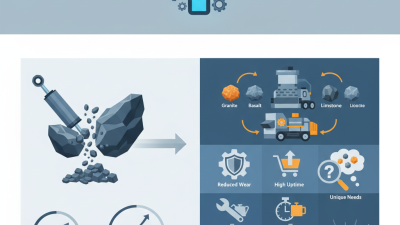
A hydraulic stone crusher uses hydraulic pressure to adjust the crushing chamber, protect the machine from uncrushable material, and produce more consistent aggregates. The chart shows representative throughput ranges for hydraulic cone crushers by feed-opening class.
Capacity is measured in metric tonnes per hour (t/h). Actual performance varies with rock hardness, feed grading, closed-side setting, moisture, and equipment configuration.
A hydraulic stone crusher reduces rock through controlled pressure rather than impact alone. Material enters the crushing chamber from a feed hopper. A rotating mantle moves against a fixed bowl liner, creating repeated compression points. The hydraulic system supports this movement and helps maintain a stable crushing gap.
A pump sends oil through valves to hydraulic cylinders. These cylinders adjust the closed-side setting, which controls the final product size. When an uncrushable object enters, such as a steel fragment, the cylinders release pressure briefly. The chamber opens, allowing the object to pass. It then returns to its working position. This protection can prevent serious damage, but it is not magic.
Operators should watch oil temperature, pressure, vibration, and product shape during each shift. A warm hydraulic line may indicate restricted flow or excessive load. Uneven stone sizes can also reveal worn liners or poor feeding. In my experience, steady feeding often matters as much as machine power. The crusher may be strong, yet an empty or overloaded chamber reduces efficiency. Regular inspections of seals, hoses, filters, and liner wear improve reliability. Still, pressure readings alone cannot prove good performance. Actual output, noise, and finished material must be checked together.
| Data Dimension | Typical Technical Data | How It Works or Why It Matters |
|---|---|---|
| Crusher Type | Hydraulic cone crusher | Most hydraulic stone crushers use a rotating mantle and a fixed concave to compress and break rock. Hydraulic systems control adjustment and provide overload protection. |
| Primary Crushing Mechanism | Compression between mantle and concave | Material is crushed when the eccentric motion of the main shaft repeatedly compresses the feed inside the crushing chamber. |
| Common Applications | Granite, basalt, limestone, river stone, iron ore and recycled aggregate | Hydraulic cone crushers are commonly used for secondary, tertiary and quaternary crushing where a controlled product size is required. |
| Typical Feed Size | Approximately 50–560 mm, depending on crusher size and chamber design | Feed size must remain within the equipment’s rated maximum. Oversized rock can reduce capacity and increase wear or blockage risk. |
| Typical Product Size | Approximately 6–45 mm in secondary and tertiary applications | The final size is mainly controlled by the closed-side setting, chamber profile, feed gradation and the number of crushing stages. |
| Closed-Side Setting (CSS) | Common operating range: about 6–45 mm for cone crushing applications | CSS is the smallest distance between the mantle and concave during the crushing cycle. A smaller CSS generally produces finer material but can reduce capacity. |
| Hydraulic Adjustment | Hydraulic cylinders adjust the bowl or mantle position | The operator can change the CSS using hydraulic pressure rather than manual mechanical adjustment, improving setup speed and control. |
| Overload Protection | Hydraulic accumulator and relief system | If uncrushable metal or excessive load enters the chamber, the system allows controlled movement or pressure release, helping protect major components. |
| Typical Capacity | Approximately 50–1,200 metric tonnes per hour | Actual throughput depends on crusher size, CSS, rock hardness, bulk density, moisture, feed distribution and the selected chamber profile. |
| Typical Installed Power | Approximately 90–750 kW | Required power increases with crusher size, feed rate, material strength and reduction ratio. The motor should be selected from the equipment’s rated operating conditions. |
| Reduction Ratio | Commonly about 3:1 to 6:1 per crushing stage | The reduction ratio is the feed top size divided by the product top size. A high overall reduction ratio is usually achieved through multiple crushing stages. |
| Material Hardness | Suitable for medium-hard to very hard rock, subject to equipment specifications | Hardness, abrasiveness and compressive strength influence liner selection, power demand, production rate and wear-part life. |
| Operating Speed | Typically about 600–1,200 revolutions per minute, depending on model and diameter | The eccentric speed affects particle shape, capacity and product grading. Operation must remain within the manufacturer’s specified speed range. |
| Lubrication System | Forced lubrication with filtration and temperature monitoring | Lubricant cools and protects bearings, gears and eccentric components. Low oil flow, high temperature or contamination can cause serious damage. |
| Hydraulic Oil Function | Adjustment, tramp release, cavity clearing and protection | Hydraulic oil transfers pressure to cylinders and accumulators, allowing the crusher to maintain settings and respond to overload conditions. |
| Particle Shape | Generally cubical to elongated, depending on chamber, feed and operating conditions | Correct choke feeding and proper CSS help maintain a stable crushing zone and can improve shape and product consistency. |
| Feed Distribution | Continuous, centered and evenly distributed feed | Uniform feeding keeps the crushing chamber full, improves liner utilization and reduces uneven wear, power fluctuations and product variation. |
| Main Wear Parts | Mantle, concave, feed plate, eccentric bushings and thrust components | Wear parts gradually change the chamber profile. Regular inspection helps maintain capacity, product size and safe operating conditions. |
| Typical Working Sequence | Feed → compression → discharge → screening → recirculation if required | Rock enters from the top, is compressed in the chamber, exits through the CSS and is then screened. Oversize material may return for additional crushing. |
| Energy Principle | Mechanical energy converted into compressive fracture energy | The motor drives the eccentric assembly, which creates the mantle’s gyrating motion and applies repeated compressive forces to the rock. |
| Key Performance Indicators | Capacity, product gradation, power draw, oil temperature, vibration and liner wear | Monitoring these values helps identify overfeeding, underfeeding, blockage, lubrication problems, abnormal wear and inefficient operation. |
Hydraulic stone crushers are valued for controlled crushing and practical maintenance. Their hydraulic systems adjust discharge settings with less manual effort. This helps produce more consistent aggregate sizes on demanding sites. Many models also include overload protection, which releases trapped metal or oversized rock. That feature can protect the chamber and reduce costly downtime. It matters in real work.
A well-designed crusher uses a heavy-duty frame, balanced rotor, and wear-resistant liners. Hydraulic adjustment can also simplify liner replacement and daily inspections. Operators should check oil temperature, pressure readings, and unusual vibration before production begins. Dust suppression and enclosed drive areas improve working conditions around the machine. However, no crusher is perfect. Wet stone may clog the chamber, and poor feeding can reduce capacity. These issues are easy to underestimate.
Tips: Select a crusher according to stone hardness, feed size, and required output. Ask for verified test data, service records, and clear component specifications. Watch the first production hours closely. Small changes in vibration or product size can reveal larger problems. Experienced technicians should inspect hydraulic hoses, seals, and filters regularly. A short maintenance log is useful. It may seem basic, but it prevents forgotten details.
Demand alone proves nothing. The USGS Mineral Commodity Summaries 2024 reported about 1.5 billion tons of crushed stone produced in the United States during 2023. This scale requires stable output, accurate adjustment, and dependable after-sales support. A reliable Chinese manufacturer should provide verifiable factory details, quality certificates, material test reports, and traceable component records. Ask for a complete hydraulic schematic, not only attractive machine photographs. Review the crusher’s capacity using your actual feed size, rock hardness, moisture, and desired product grading.
In practical purchasing, small details often expose weak control. Compare serial numbers on inspection reports with the machine plate. Confirm whether critical parts are manufactured internally or sourced externally. The 2023 World Bank Logistics Performance Index shows that shipping reliability varies significantly between economies, so packaging and export experience matter. Request photographs of wooden-case reinforcement and moisture protection. I would not judge a supplier by price alone; that habit can be expensive. Still, technical claims deserve independent testing, because even a professional quotation may contain optimistic figures. A trial run with your own stone is stronger evidence than a polished brochure.
Hydraulic stone crushers serve quarries, road projects, concrete plants, and recycling yards. USGS Mineral Commodity Summaries 2024 estimates 1.9 billion metric tons of crushed stone were produced in the United States during 2023. That scale demands stable output, not impressive catalogue claims. In practice, operators adjust the closed-side setting for feed size and required aggregate grading. Recycled concrete needs extra attention. Steel fragments can damage internal parts and contaminate finished material.
Maintenance begins with observation. Check hydraulic oil level, pressure, leaks, and hose abrasion before each shift. Inspect the chamber after shutdown, not while the rotor or cone can move. Record vibration, temperature, product size, and hourly throughput. These simple records expose gradual wear. Replace worn liners before uneven crushing increases power use. A useful warning: maintenance intervals from a manual may not fit dusty, wet, or highly abrasive sites. Local material changes everything.
Safety controls must be measurable. OSHA’s respirable crystalline silica standard sets a permissible exposure limit of 50 micrograms per cubic meter over an eight-hour shift, with an action level of 25 micrograms. Enclosed transfer points, water suppression, and local exhaust ventilation reduce dust at the source. Guarding, lockout procedures, and verified zero energy are essential during clearing. Never trust hydraulic pressure alone. A blocked chamber can release stored energy suddenly. Workers also need hearing protection, clear communication, and practical training. No checklist replaces judgment.