Leave Your Message

Top 5 Quarry Crusher Types You Need to Know?

In the world of construction and mining, understanding quarry crushers is essential. These machines play a crucial role in processing materials like stone and gravel. According to industry expert John Smith, “Choosing the right quarry crusher can make or break a project.” This highlights the importance of selecting the correct equipment.

Quarry crushers come in various types, each serving a unique purpose. Knowing their differences can lead to more efficient operations. For instance, cone crushers excel in reducing materials to specific sizes. Jaw crushers are robust and suitable for large tasks. However, many operators still struggle with selecting the ideal machine. This can lead to suboptimal performance and increased operational costs.

Reflecting on the industry, there is often a lack of thorough understanding about these machines. Many are swayed by advertisements rather than actual needs. This disconnect can result in poor investment choices in quarry crushers. Ultimately, the decision made could impact project timelines and budgets.
Top 5 Quarry Crusher Types You Need to Know?

Types of Quarry Crushers: An Overview of Essential Models

In the world of quarrying, understanding the types of crushers is crucial. Quarry crushers drive production efficiency and resource management. The most common types include jaw crushers, cone crushers, impact crushers, and hammer crushers. Each serves a unique purpose, tailored to different materials and operational needs.

Jaw crushers are favored for primary crushing. They can handle hard materials and offer a reduction ratio of about 6:1. Reports indicate they are capable of processing over 1,000 tons of material per hour. However, they require regular maintenance to ensure optimal performance. Cone crushers are ideal for secondary crushing tasks. They provide a smoother product shape but can be less forgiving with harder rocks. Their capacity can reach up to 400 tons per hour.

Impact crushers excel in material shaping and are effective for softer materials. They operate at high speeds, leading to significant wear on parts. Data shows their efficiency can be up to 30% higher than other types, but they may incur higher operational costs. Hammer crushers, while versatile, often struggle with large or heavy materials. Their fragmentation is impactful but less predictable. Each type of crusher has inherent limitations that need addressing. Understanding these nuances ensures better decision-making in quarry operations.

Top 5 Quarry Crusher Types You Need to Know

Crusher Type Description Advantages Best Use
Jaw Crusher Used for primary crushing of large materials. High reduction ratio, large capacity. Quarrying, mining, and recycling.
Cone Crusher Designed for secondary and tertiary crushing. Excellent crushing efficiency, uniform product size. Stone shaping and final product preparation.
Impact Crusher Utilizes impact force for material crushing. Good for soft and medium-hard materials. Concrete recycling, asphalt recycling.
Hammer Crusher Uses hammers to crush materials through impact. Simple structure, high productivity. Coal, salt, gypsum, and other soft materials.
Mobile Crusher Portable solution for on-site crushing. Flexibility and productivity in various sites. Construction sites and small quarries.

Jaw Crushers: Key Features and Benefits in Quarry Operations

Jaw crushers play a crucial role in quarry operations. They are known for their robustness and efficiency. According to a report from the Aggregates and Mining Industry, jaw crushers account for nearly 40% of the global market share in the rock crushing equipment segment.

In a quarry, these machines excel at processing hard materials. Their primary function is to break down large rocks into smaller, manageable sizes. This process is essential for further processing. The design of jaw crushers allows for a high reduction ratio, often exceeding 6:1. This means they can produce more material from less input, which enhances overall productivity.

However, there are challenges. Maintenance can be a concern, as wear and tear are common due to heavy usage. Regular inspections are necessary to ensure optimal performance. Some operators report difficulties in adjusting the settings for different material types. Addressing these issues can improve efficiency, yet many find this a persistent hurdle in their operations. Flexibility is key, but it also requires time and effort to achieve.

Top 5 Quarry Crusher Types You Need to Know

Impact Crushers: Efficiency in Reducing Material Size

Impact crushers are essential in the quarry industry for their efficiency in reducing material size. These machines use high-speed impact force to break down rocks and other materials. With a simple yet effective design, they can produce various sizes of aggregates. This capability makes them a popular choice for construction projects.

When selecting an impact crusher, consider the material type you will process. Not all crushers handle every material well. Larger rocks may require a different approach than smaller materials. It's crucial to match your crusher to your specific needs.

Tips: Always analyze the feed size. Understanding the maximum size you will input into the crusher is vital. This information helps in selecting the right model. Regular maintenance is another aspect that can’t be overlooked. A well-maintained crusher operates more efficiently and has a longer lifespan. Aim for a balance between performance and upkeep.

Cone Crushers: Versatility and Performance in Harsh Environments

Top 5 Quarry Crusher Types You Need to Know?

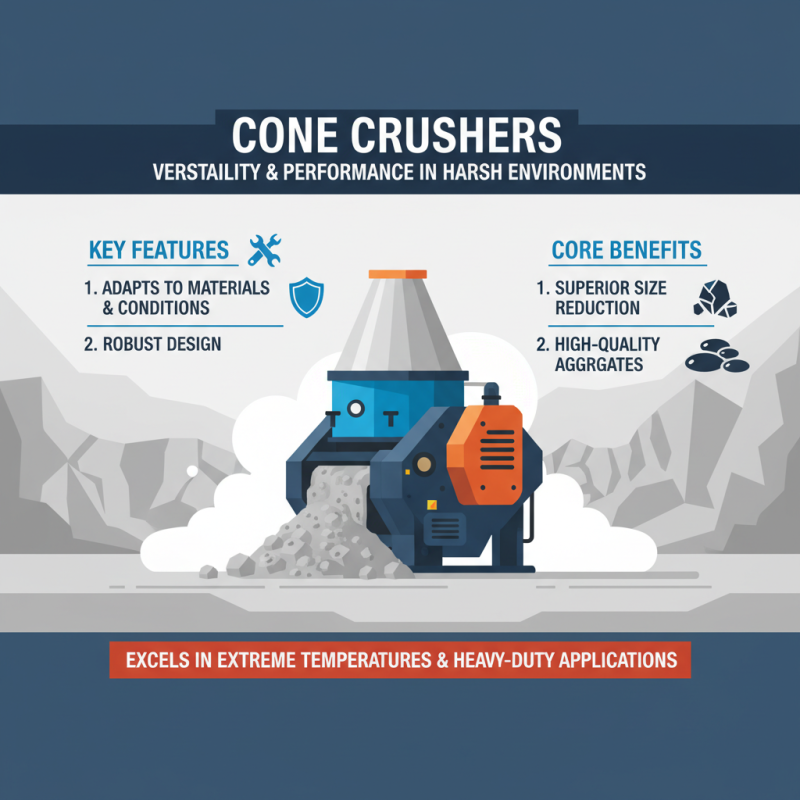
Cone crushers are essential in the quarrying industry. They excel in size reduction and produce high-quality aggregates. One key feature is their versatility. These machines can adapt to various materials and crushing conditions. Their robust design makes them suitable for harsh environments. Extreme temperatures and heavy-duty applications are no match for their performance.

A notable characteristic is the adjustable settings. Operators can modify the output size quickly. This capability optimizes production and reduces waste. However, it requires skilled personnel to adjust and maintain the equipment. Training becomes an essential aspect. An untrained operator can lead to inefficiencies.

Moreover, cone crushers can experience wear over time. Regular maintenance is crucial to keep them running smoothly. Parts like liners and bushings often need replacement. Ignoring this can lead to costly downtime. Balancing performance with maintenance is a continuous challenge. The goal is always to maximize output while ensuring longevity.

Selecting the Right Quarry Crusher for Your Specific Needs

Top 5 Quarry Crusher Types You Need to Know?

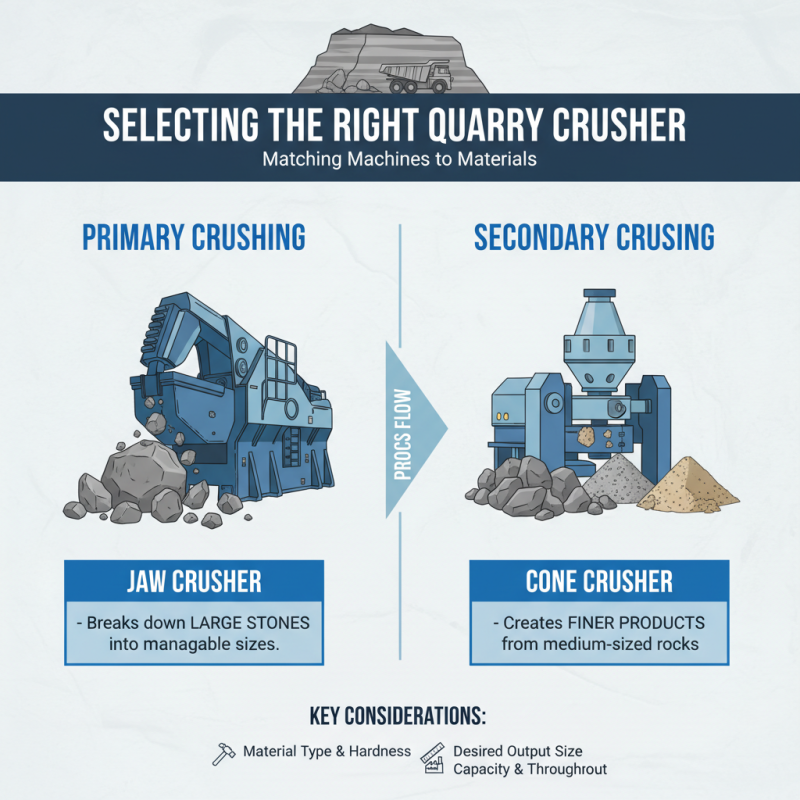
When selecting a quarry crusher, it's crucial to understand your specific needs. Different types of crushers serve varied purposes. For example, jaw crushers are ideal for primary crushing. They break down large stones into manageable sizes. On the other hand, cone crushers are excellent for secondary crushing. They create finer products from medium-sized rocks.

Consider the material you will be processing. Some crushers perform better with harder materials. Others may struggle and wear out quickly. It’s important to evaluate the expected workload. Are you processing gravel or heavy granite? The right choice can affect efficiency. Improper selection might lead to costly downtime.

Maintenance is another key factor. Some crushers require more upkeep than others. This can impact operational costs significantly. Think about the availability of spare parts too. If a part fails, how quickly can it be replaced? These details can save time and money in the long run.