The 2026 Jaw Breaker market is becoming more specialized, yet many global buyers still compare machines by price alone. That can be a costly shortcut. A quarry processing hard granite needs different performance from a contractor recycling concrete beside an urban road. Feed size, abrasiveness, moisture, output requirements, transport limits, and local service access all change the buying decision.
Dr. Barry A. Wills, a respected mineral-processing author, offers a practical principle: “The best crusher is the one that matches the ore, not the brochure.” This idea remains relevant for buyers comparing single-toggle, double-toggle, mobile, stationary, hydraulic, and diesel-electric Jaw Breaker designs. Single-toggle models often offer a simpler structure and lower initial cost. Double-toggle machines may suit demanding applications requiring strong compression and stable operation. Mobile units add flexibility, but their tracks, engines, and dust-control systems require careful inspection. Stationary systems can deliver dependable capacity, although relocation is difficult.
Look beyond headline capacity. Check the actual feed gradation, closed-side setting, liner material, motor efficiency, and maintenance intervals. Ask how quickly replacement parts reach your region. Ask again.
Some buyers may expect one type to lead every market. That assumption is imperfect. Climate, electricity reliability, operator skill, and financing conditions can change the final choice. This guide examines the leading 2026 Jaw Breaker types through practical operating details, lifecycle value, safety expectations, and supplier credibility. The goal is not to promote the largest machine. It is to identify the most suitable machine for each real-world application.
A jaw breaker, more commonly called a jaw crusher, reduces rock between two steel plates. One plate stays fixed, while the other moves through an eccentric shaft. The moving jaw compresses feed against the fixed jaw until the material fractures. Gravity then carries the crushed stone through the discharge opening. Simple in principle. Demanding in practice.
USGS Mineral Commodity Summaries 2025 estimates that the United States produced about 1.5 billion metric tons of crushed stone in 2024. That volume shows why reliable primary crushing matters in roads, concrete, and mining. Buyers should check feed size, compressive strength, moisture, and required output before selecting equipment. A smaller discharge setting creates finer material, but it also increases power use and wear. ISO 21873-1 provides terminology and safety-related requirements for mobile crushing equipment, offering a useful reference during technical evaluation. Field experience adds another lesson: dusty feed, uneven rock, and poor maintenance can reduce real capacity sharply. Laboratory figures may look impressive. Jobsite conditions are less tidy.
In 2026, single-toggle jaw breakers are likely to lead high-volume global markets. Their compact structure, lower purchase cost, and easier maintenance suit quarry and aggregate operators. Portable versions should gain attention where road projects move between short-term sites. Less downtime matters.
Fortune Business Insights’ 2024 Crushers Market report values the global crushers sector at about USD 5.5 billion in 2023. It projects continued growth through 2032, supported by construction, mining, and infrastructure spending. Jaw equipment will benefit from this demand, especially in primary crushing. However, market reports often combine several crusher categories, so jaw-specific forecasts need careful reading.
Double-toggle jaw breakers will remain important for hard rock and abrasive feed. They generally offer strong compression performance, but their heavier frames and more complex maintenance can limit smaller projects. Mobile jaw breakers may lead sales growth in regions needing flexible deployment, while stationary machines should retain volume leadership at established quarries. A 2024 report from Research and Markets also identifies infrastructure expansion and urban development as major crusher-market drivers. The forecast is useful, not perfect. Electricity prices, local quarry permits, transport costs, and operator skills can change buying decisions quickly. In practice, a buyer handling wet, sticky feed may choose differently from a buyer processing dry granite. There is no universal winner.
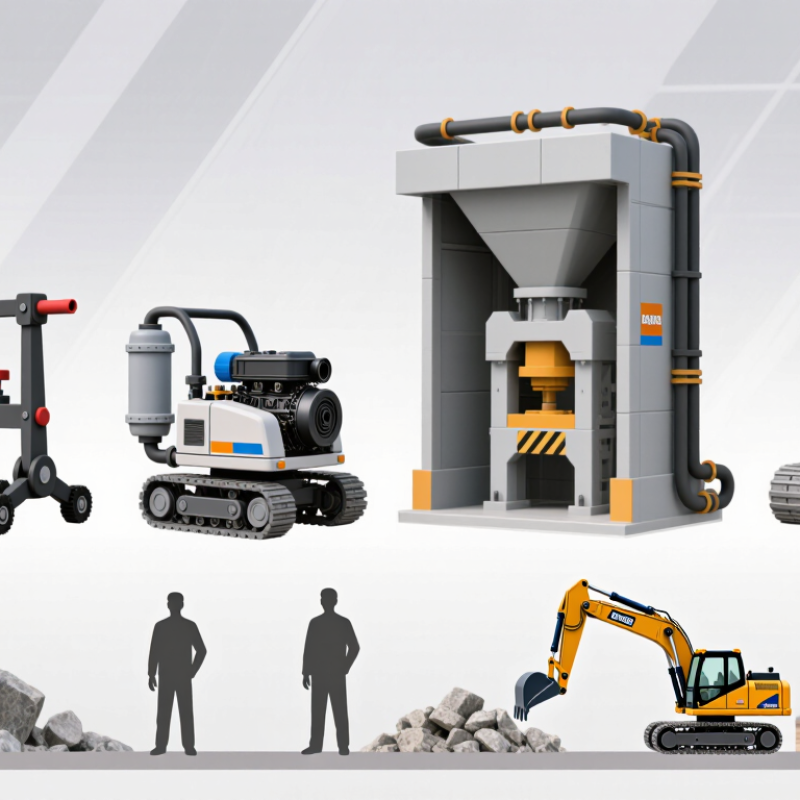
For global buyers, jaw breakers, often called jaw crushers, fall into three practical groups. Mobile models use tracks and move directly across a quarry or demolition site. Stationary models sit on engineered foundations and connect with fixed conveyors. Portable models usually use wheels, frames, and transportable conveyors. The labels are not universal. Some suppliers use “mobile” for every relocatable system.
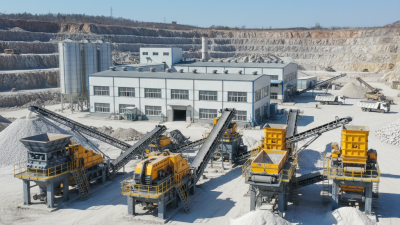
According to the USGS Mineral Commodity Summaries 2025, the United States produced about 1.5 billion metric tons of crushed stone in 2024. That volume shows why uptime, feed consistency, and maintenance access matter. A mobile breaker suits changing work faces and short-term projects. It reduces haulage between extraction points. However, tracks can increase purchase and maintenance costs. Stationary equipment generally supports higher, steadier throughput. It fits long-life quarries with reliable electricity and permanent material flow.
Portable systems offer a practical middle ground. A wheeled unit can move between sites, but road permits, towing limits, and setup space still apply. A crane may be needed. Buyers should compare the closed-side setting, maximum feed size, motor power, dust controls, and liner replacement time. Published capacity is only an estimate. Moisture, abrasive rock, operator skill, and uneven feeding can reduce real output. I would not select a type from capacity alone. UNEP’s Global Resources Outlook 2024 reports that global material extraction could rise about 60% by 2060, making efficient, adaptable crushing equipment increasingly important.
Global buyers should compare duty before comparing price. The USGS Mineral Commodity Summaries 2025 estimates 2024 U.S. crushed stone production at about 1.5 billion metric tons. That scale demands stable throughput, not only a large feed opening.
Single-toggle jaw crushers usually offer lower weight and simpler maintenance. They suit mobile plants and medium-hard rock. Double-toggle designs often tolerate harder, abrasive feed, but require more structural mass. Published equipment data across the sector commonly shows capacities from roughly 50 to 1,500 tonnes per hour, with installed power ranging from about 50 to 400 kilowatts. These are broad indications. Actual output depends on closed-side setting, feed grading, moisture, and operator control. A wet, clay-coated feed can reduce performance sharply. High-manganese jaw plates suit many hard-rock applications, while composite or specialized alloys may improve wear life. The right material is application-specific.
Tips: Request test results using your actual rock. Check throughput at the planned setting, not the maximum brochure figure. Compare energy use per tonne, liner replacement time, and access around the machine. Ask for references from similar granite, basalt, limestone, or recycled-concrete operations. ASTM and ISO-based laboratory data can support abrasion and strength comparisons. A neat spreadsheet helps, but field conditions often disagree. Build a realistic allowance for fines, oversize, and seasonal moisture.
2026 Top Jaw Breaker Types for Global Buyers
Global buyers often compare fixed, mobile, single-toggle, and double-toggle jaw breakers. Each type suits different feed sizes, site layouts, and maintenance skills. Single-toggle models usually have fewer moving parts and simpler servicing. Double-toggle designs can handle demanding crushing conditions but need closer inspection. Mobile units reduce relocation time. However, their transport frames require careful checking.
Safety starts with controlled access. Guards must cover flywheels, belts, and exposed pinch points. Emergency stops should remain visible from operator positions. Install lockout and isolation devices before clearing blockages. Dust suppression and noise controls also matter near workers. Keep walkways dry and free from spilled material.
Maintenance records reveal more than sales brochures. Inspect jaw plates, bearings, bolts, and hydraulic lines at scheduled intervals. Check abnormal vibration before it becomes a costly failure. Replace worn parts according to measured limits, not guesswork. Do not ignore small oil leaks. They often become larger hazards. Compliance documents should cover risk assessment, electrical safety, guarding, noise, dust, and local machinery requirements. Ask for test reports, manuals, inspection intervals, and traceable component details. Requirements vary by destination, so buyers should verify current national rules with qualified local experts. I have seen projects delayed because documentation arrived late. A perfect checklist can still miss operator training. That gap deserves honest review.
| Jaw breaker type | Typical operating profile | Best-fit applications | Main safety priorities | Maintenance priorities | Global compliance checkpoints | Buyer suitability |
|---|---|---|---|---|---|---|
| Single-toggle jaw crusher | One toggle plate drives the swing jaw. Generally compact, efficient, and widely used for primary crushing. Suitable for a broad range of quarry and recycling duties. | Natural stone, aggregates, construction and demolition material, concrete, and moderately abrasive ores. | Guard the flywheels, belts, drive, and pinch points; install an accessible emergency stop; prevent unplanned restart; use a lockout/tagout procedure before clearing blockages; control flying fragments and dust. | Inspect jaw dies, toggle plate, bearings, cheek plates, fasteners, and belt tension. Monitor abnormal vibration, bearing temperature, lubrication condition, and CSS drift. | Risk assessment and safeguarding to ISO 12100; safety-related control systems evaluated under ISO 13849-1 or IEC 62061; electrical equipment aligned with IEC 60204-1; guarding and crushing machinery requirements checked against applicable local rules and EN 1009-3 where relevant. | Strong general-purpose choice where compact layout, moderate capital cost, and straightforward service access are important. |
| Double-toggle jaw crusher | Uses two toggle plates and typically produces a more compressive crushing action. Often selected for heavy-duty service and highly abrasive feed. | Hard rock, highly abrasive stone, mine-run material, and demanding primary crushing circuits with high shock loads. | Provide robust structural guarding, safe hydraulic or mechanical adjustment, stored-energy controls, and a verified method for removing tramp metal. Never enter the crushing chamber without isolation and documented access controls. | Check toggle plates and seats, pitman and eccentric bearings, jaw dies, tension components, lubrication routes, and foundation bolts. Schedule inspections according to load, duty cycle, and abrasive conditions. | Confirm guarding, emergency-stop circuits, safe access, lifting points, noise and dust controls, and conformity documentation required in the destination market. For EU installations, assess the applicable machinery legislation and harmonized standards in force at commissioning. | Preferred for severe-duty applications where durability and resistance to shock loading outweigh a larger machine footprint. |
| Overhead-eccentric jaw crusher | Eccentric shaft is positioned above the crushing chamber. The design can provide a high crushing stroke and is commonly used for primary reduction. | Large quarry feed, hard rock, mineral processing, and applications requiring a substantial feed opening and high reduction in the primary stage. | Protect the elevated eccentric drive and all rotating components; verify the foundation and lifting arrangement; use guarding against nip points, falling material, and ejected fragments. | Monitor eccentric and pitman bearings, shaft alignment, jaw-die wear profile, cheek-plate condition, lubrication temperature, and structural fatigue around the frame. | Validate static and dynamic load data for the supporting structure; review mechanical guarding, electrical safety, noise, dust, lifting, and inspection requirements for the installation country. | Suitable for high-throughput primary circuits when civil works, access, and heavy maintenance equipment are available. |
| Mobile jaw crusher | Jaw crusher mounted on tracks, wheels, or a transportable chassis. Designed for relocation between stockpiles, demolition sites, quarries, or road projects. | Road construction, urban demolition, recycling, short-term quarrying, and projects where a fixed plant is impractical. | Confirm stability on the working surface, travel and parking controls, remote-stop function, operator visibility, access platforms, conveyor guarding, dust suppression, and safe transport dimensions. | Inspect tracks or axles, hydraulic hoses, filters, engine or electric drive, conveyor belts, hopper liners, jaw dies, dust-suppression equipment, and chassis fasteners before each shift or move. | Check mobile-equipment traffic rules, road transport permits, machine guarding, emissions requirements, radio or remote controls, noise, dust, and operator-training obligations in each jurisdiction. | Best where relocation, reduced civil construction, and fast site deployment deliver greater value than maximum fixed-plant capacity. |
| Recycling jaw crusher | Configured for variable feed containing concrete, masonry, asphalt, rebar, wood, and other contaminants. Often paired with a vibrating feeder, magnet, and dust-control system. | Construction and demolition waste, reinforced concrete, demolition sites, recycled aggregates, and landfill-diversion projects. | Use upstream sorting and magnetic separation; control rebar entanglement and tramp metal; provide dust suppression; prohibit manual removal of lodged material while energized. | Inspect jaw dies, impact areas, feeder liners, magnet, belts, hydraulic relief system, chamber clearance, and wear caused by steel contamination. Remove accumulated dust from motors and electrical cabinets. | Assess silica exposure, noise, waste classification, recycled-aggregate quality requirements, electrical safety, guarding, and local environmental permits. Apply workplace exposure controls where respirable crystalline silica may be generated. | Appropriate for variable and contaminated feed only when sorting, magnetic protection, dust control, and operator procedures are properly designed. |
| Laboratory or small jaw crusher | Compact, low-throughput equipment for sample preparation. Usually operated intermittently with controlled feed quantities. | Geological samples, aggregate testing, mineral laboratories, quality-control rooms, and educational facilities. | Interlocked feed and discharge access, enclosed chamber, low-noise design, local exhaust ventilation, safe sample handling, and clear procedures for cleaning and jam removal. | Clean the chamber after use; inspect jaw plates, springs, bearings, fasteners, electrical cables, and dust seals; verify product-size adjustment and calibration-related records. | Confirm laboratory electrical safety, guarding, noise limits, dust exposure controls, emergency isolation, and applicable product-safety documentation. Use suitable laboratory ventilation for respirable dust. | Ideal for sample preparation, but not a substitute for production-scale equipment or continuous-duty crushing. |

Note: Jaw-die life, throughput, power demand, reduction ratio, and maintenance intervals are application-specific. Abrasive feed, oversize material, tramp metal, poor lubrication, excessive CSS changes, and inadequate dust control can significantly reduce service life and increase risk.