Choosing the right Stone Crusher Machine begins with understanding the material, not admiring the machine’s size. Granite, limestone, recycled concrete, and river gravel behave differently under pressure. Their hardness, moisture, abrasiveness, and feed shape directly affect crusher performance.
Dr. Tim Napier-Munn, a respected comminution expert, offers a useful principle: “The best crusher is the one that fits the whole circuit, not the one with the highest capacity.” This idea deserves attention. A powerful machine may still produce poor results if the screen, conveyor, or feeder cannot support it. A quarry operator might load wet limestone into a jaw crusher and see reduced throughput within minutes. That small detail can change the entire buying decision.
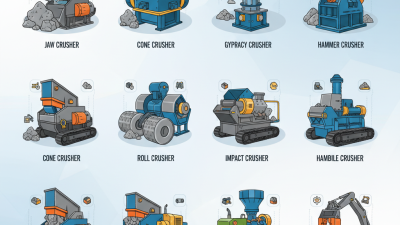
The selection process should examine feed size, required output, product shape, operating hours, maintenance access, and energy use. Jaw crushers often suit primary breaking, while cone crushers can deliver more controlled aggregate sizes. Impact crushers may create excellent cubic particles, but abrasive rock can increase wear costs. No machine is perfect.
Experience matters here. A supplier should explain liner replacement intervals, spare-part availability, safety features, and realistic production figures. Buyers should also inspect similar installations, not rely only on brochures. I have seen capacity claims look impressive on paper, yet actual output declined when the material became damp or oversized. That is an uncomfortable lesson, but an important one. This guide explains how to compare machines carefully and choose equipment that performs reliably in real working conditions.
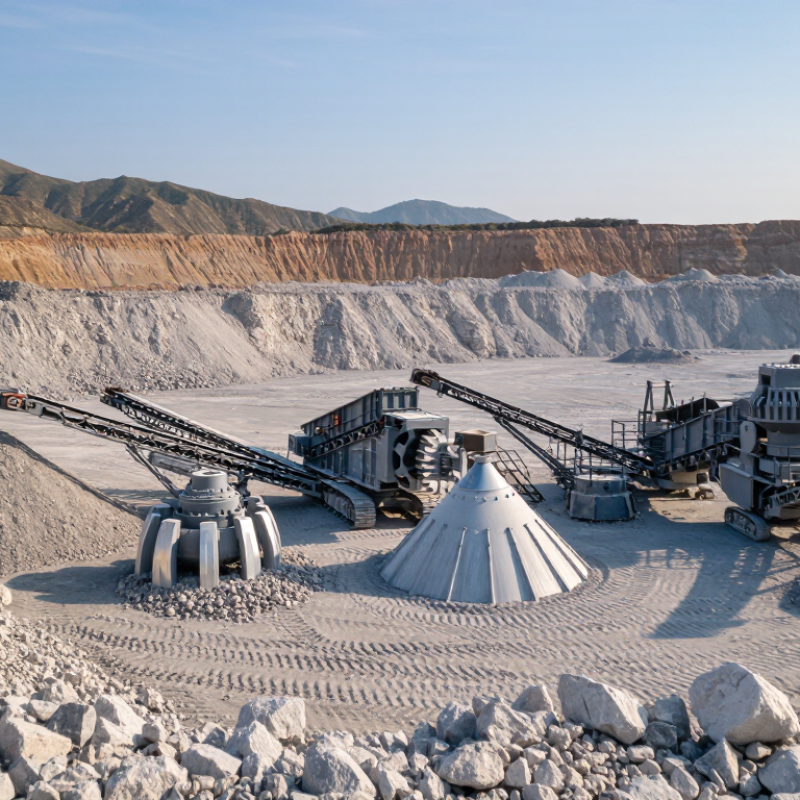
Choosing a stone crusher starts with understanding the material you need to process. Do not select a machine from capacity charts alone. Granite, limestone, river gravel, and recycled concrete behave differently during crushing. Granite is hard and abrasive, while limestone is softer but may create more dust. Check the material’s hardness, moisture, abrasiveness, and natural particle size. A muddy feed can block equipment quickly. A large boulder may exceed the crusher’s safe inlet size.
Real site experience matters here. I have seen operators underestimate wet clay mixed with stone. The machine appeared powerful, yet production dropped after several hours. Measure the actual feed material during normal working conditions. Laboratory results help, but field samples often reveal inconvenient details.
Production requirements must be equally specific. Define the desired output per hour, finished sizes, working hours, and available power. A small construction project may need 30 tons per hour, while a quarry may require several hundred. Decide whether the final product needs one size or multiple graded sizes. This choice affects the crushing stages and screening arrangement. Leave room for seasonal changes.
Think carefully about maintenance access and feeding methods. A crusher that fits the budget may still perform poorly in a cramped site. Test representative samples when possible. The first selection may be wrong. That is normal, but ignoring early wear, uneven feed, or unstable output becomes expensive. Record operating results and adjust the setup before expanding production.
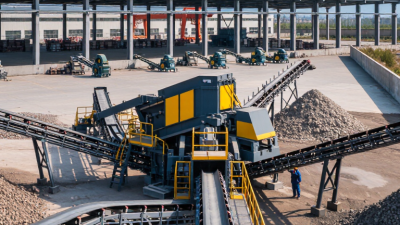
Match the crusher to your processing goal, not only the stone size. A jaw crusher suits primary reduction of hard, abrasive rock. It accepts large feed and creates a dependable, rough product. For tighter specifications, a cone crusher often performs better in secondary or tertiary stages. It produces a more consistent gradation, though it needs controlled feeding. An impact crusher can improve particle shape and handle softer limestone or recycled concrete. It may wear faster with highly abrasive material.
The U.S. Geological Survey reported about 1.9 billion metric tons of crushed stone production in 2023. That scale makes equipment efficiency important. Yet production volume alone cannot select a machine. Check the feed size, moisture, abrasiveness, target output, and hourly capacity.
The wrong chamber can increase recirculation, power use, and maintenance delays. Small details matter. A plant producing road base needs different results from one making manufactured sand. Product testing should confirm the decision, rather than relying on a catalogue table.
Tips:
Measure the largest feed rock at the quarry face. Request a material abrasion test before purchase. Compare actual closed-side settings with your required grading. Leave room for liner wear; I have seen excellent calculations fail there. Review dust control, guarding, noise, and inspection access with qualified engineers. The best machine is not always the fastest one. It is the one that reaches the required product with stable operating costs.
(Source: U.S. Geological Survey, Mineral Commodity Summaries 2024.)
How to Choose the Right Stone Crusher Machine?
Evaluate Capacity, Feed Size, and Output Specifications
Choosing a stone crusher starts with the material, not the machine name. In field assessments, I measure hardness, moisture, bulk density, and the largest rock size. These details affect performance more than a brochure’s headline capacity.
Capacity should match the required tonnes per hour, with practical room for variation. A machine rated at 100 tonnes per hour may produce less with wet, sticky, or highly abrasive stone. Allowing a 15% to 25% operating margin can reduce stoppages. Do not ignore peak demand. It often exposes weak planning.
Feed size needs careful checking. The crusher’s feed opening must accept the largest rock without bridging. I prefer a safety margin instead of using the maximum listed dimension. Oversized stones may require controlled breaking before feeding. That adds labor, delay, and cost. My early estimates were too optimistic when I used average rock size instead of the largest pieces.
Output specifications should define the final product clearly. State the target sizes, acceptable fines, and required particle shape. A road base project may tolerate more fines than concrete production. Adjusting the discharge setting changes both capacity and gradation. A tighter setting can improve size control, but it may lower throughput and increase wear. Trial runs with a sample load provide stronger evidence than calculations alone. Check the product with screening tests, and record actual belt-scale readings.
Compare typical non-brand operating ranges for capacity, maximum feed size, and common product output. Actual performance depends on rock type, moisture, hardness, reduction ratio, and application settings.
| Crusher type | Typical capacity | Maximum feed size | Common output size | Best suited for |
|---|---|---|---|---|
| Jaw crusher | 50–1,200 t/h | Up to 1,200 mm | 25–300 mm | Primary crushing of large, hard rock |
| Cone crusher | 100–800 t/h | Up to 350 mm | 10–60 mm | Secondary and tertiary crushing |
| Impact crusher | 80–600 t/h | Up to 500 mm | 20–100 mm | High reduction and cubical aggregates |
| VSI crusher | 50–300 t/h | Up to 100 mm | 0–25 mm | Fine shaping and manufactured sand |
Start by matching the machine’s feed opening to the largest rock size, then confirm that its capacity meets the required tons per hour. Finally, check the discharge setting and crushing stage to achieve the target output gradation.
Choosing the right stone crusher machine starts with actual power conditions, not a brochure’s maximum output. Measure feed size, rock hardness, moisture, and expected tonnes per hour. Then compare motor power with the site’s voltage and generator capacity. A machine running near its limit may overheat, stall, or produce uneven material. Leave a practical power margin. Measure twice.
Wear parts deserve equal attention. Ask which liners, blow bars, jaw plates, or screen media fit the machine. Record their expected service life for your rock type. Abrasive granite can consume parts faster than softer limestone. Inspect thickness during scheduled stops instead of waiting for sudden product changes. Keep critical replacements dry, labeled, and near the workshop. Cheap parts can create expensive downtime. I have seen a small crack become a full shift of lost production.
Maintenance access often decides whether a crusher remains reliable. Check the space around inspection doors, grease points, belts, and discharge areas. Can one technician safely reach the main wear components? Are guards removable without awkward lifting? Good access shortens inspections and reduces rushed repairs. Follow the service manual, isolate energy sources, and use suitable lifting equipment. Small details matter. One overlooked access panel can delay repairs for hours. Recheck the layout after installation.
| Crusher Type | Typical Application | Typical Motor Power Range | Typical Feed Size | Typical Capacity Range | Common Wear Parts | Maintenance Access | Key Selection Consideration |
|---|---|---|---|---|---|---|---|
| Jaw Crusher | Primary crushing of hard rock, recycled concrete, and large mineral feed | 75–400 kW | Up to approximately 1,000 mm, depending on model | 50–1,200 t/h | Fixed jaw plate, movable jaw plate, cheek plates, toggle plate | Generally straightforward; inspect plates through the crusher opening and provide safe lifting access | Choose the feed opening and jaw profile according to the largest rock size and required reduction ratio |
| Cone Crusher | Secondary, tertiary, or quaternary crushing of abrasive and hard stone | 90–750 kW | Approximately 35–450 mm, depending on chamber and model | 70–1,000 t/h | Mantle, bowl liner, eccentric bushings, thrust bearings, sealing components | Requires hydraulic adjustment, liner-lifting equipment, lubrication checks, and access around the main frame | Check closed-side setting, liner life, automation needs, and the stone’s abrasiveness |
| Horizontal Shaft Impact Crusher | Primary or secondary crushing of limestone, recycling materials, and moderately hard rock | 110–700 kW | Approximately 250–1,000 mm, depending on rotor size | 100–1,200 t/h | Blow bars, impact plates, liners, side wear plates | Large hinged doors are useful; allow overhead or side lifting space for blow-bar replacement | Confirm maximum feed strength and abrasion level because wear costs can rise with hard, silica-rich rock |
| Vertical Shaft Impact Crusher | Manufactured sand, cubical aggregates, and shaping of already-crushed material | 75–500 kW | Usually below 60 mm, depending on the rotor and operating mode | 50–600 t/h | Rotor tips, wear plates, distributor plate, cavity liners | Requires safe access to the rotor and internal chamber; scheduled inspection is important | Select according to desired particle shape, feed grading, moisture, and acceptable fine-particle content |
| Gyratory Crusher | High-capacity primary crushing in large-scale mining and quarry operations | 500–2,500 kW or more | Up to approximately 1,500 mm, depending on equipment size | 1,000–10,000 t/h | Mantle, concaves, spider components, bushings, bearings, seals | Needs substantial structural clearance, heavy lifting equipment, and planned shutdown access | Best suited to continuous, high-throughput duty where foundation and installation requirements can be met |
Choosing a stone crusher starts with safety, not the lowest quotation. MSHA recorded 40 mining fatalities in the United States during 2023, including 31 in metal and nonmetal operations. A crusher should include guarded drive belts, emergency-stop cables, lockout points, and clear inspection access. Ask for documented risk assessments and safety training records. Small details matter. A dusty control room signals weak site discipline.
Cost comparisons must include ownership, not only purchase price. The U.S. Geological Survey reported about 1.5 billion metric tons of crushed stone production in 2023. At that scale, a short shutdown can quickly exceed the initial price difference. Compare expected tonnes per hour, energy use per tonne, liner life, labor needs, and planned maintenance. Request test data using material similar to yours. Generic figures can mislead. I would not assume a larger machine is automatically cheaper.
Supplier support often decides whether equipment earns money or sits idle. Require written spare-parts lead times, commissioning support, operator training, warranty limits, and remote troubleshooting arrangements. The U.S. Department of Energy’s Mining Industry Energy Bandwidth Study identifies comminution as a major energy-consuming stage. Therefore, ask suppliers to explain their efficiency assumptions. Keep service contacts visible beside the control panel. A polished proposal is not proof of dependable support. References from comparable quarries are stronger evidence. Check them carefully.