Leave Your Message
Choosing a China Top Stone Crusher Manufacturer for Global Buyers requires more than comparing prices and photographs. A reliable supplier should understand rock properties, production targets, site conditions, and maintenance realities. Granite, limestone, river stone, and recycled concrete behave differently inside a crushing chamber. The correct Stone Crusher must match feed size, discharge requirements, moisture levels, and expected capacity. Otherwise, impressive specifications may produce disappointing results.
Dr. F. C. Bond, whose research influenced modern crushing and grinding design, stated, “The work input is proportional to the new crack tip length produced.” This principle still matters when buyers evaluate jaw crushers, cone crushers, impact crushers, and complete screening plants. A professional manufacturer should explain how liner profiles, motor power, eccentric movement, and closed-side settings affect performance. It should also provide material testing, layout guidance, documented inspections, and practical spare-parts support.
Look beyond the brochure.
Experienced buyers often request running videos, factory inspection records, component brands, and reference projects. They should also confirm electrical standards, safety protections, noise controls, and after-sales response times. These details can reveal whether a supplier truly understands international projects. However, no manufacturer is perfect. Even a well-designed Stone Crusher may need adjustment after installation. Real feed conditions can differ from laboratory samples. That limitation deserves honest discussion, not polished promises. A trustworthy Chinese supplier earns confidence through measurable data, clear communication, and support that continues after shipment.
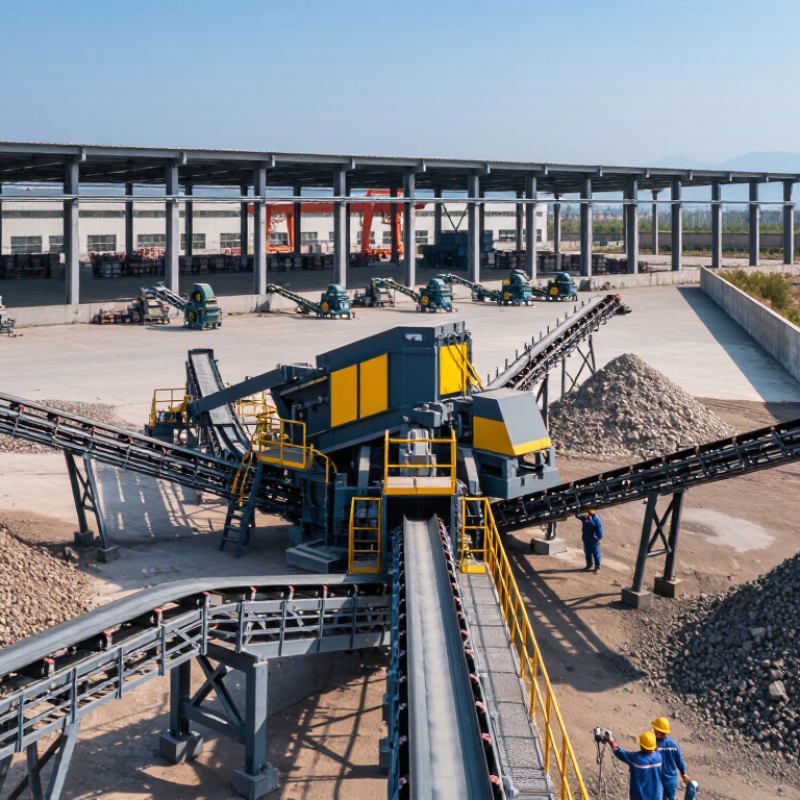
A top stone crusher manufacturer is defined by verified engineering, not a polished catalog. The U.S. Geological Survey reported about 1.5 billion metric tons of crushed stone production in the United States in 2023. This scale demands stable output, accurate grading, and equipment that survives continuous operation. A capable Chinese manufacturer should provide test results for feed size, capacity, power use, and final product distribution.
Real experience appears in the details. Engineers should inspect the quarry layout, rock hardness, moisture, and transport limits before selecting a jaw, cone, or impact crusher. The 2024 USGS Mineral Commodity Summaries also estimated global cement production near 4.1 billion metric tons in 2023. That figure signals sustained demand for reliable aggregate systems, but demand alone proves nothing. Proof matters. Factory assembly records, material certificates, documented inspections, and commissioning data are stronger evidence.
Professional support must continue after shipment. Clear manuals, spare-parts planning, remote diagnostics, and operator training reduce avoidable downtime. Safety guarding and electrical documentation should match the destination market’s requirements. Energy consumption also deserves scrutiny, because a low purchase price can hide high operating costs. Some manufacturers may present ideal laboratory figures, while field conditions perform differently. Buyers should request site references and independent performance checks. A top supplier accepts that scrutiny, communicates limitations, and improves its design when real quarry data exposes weaknesses.
| Evaluation Dimension | Realistic Industry Benchmark | What a Top Manufacturer Should Demonstrate | Recommended Buyer Verification |
|---|---|---|---|
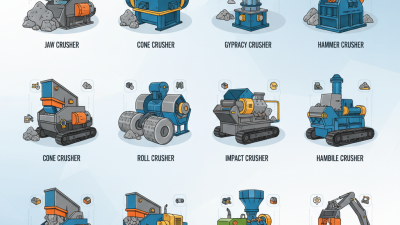
| Product Range | Jaw crushers, cone crushers, impact crushers, hammer crushers, vibrating feeders, screens, and complete crushing plants are commonly used in aggregate and mining applications. | Integrated equipment selection covering primary, secondary, and tertiary crushing stages rather than offering only one machine type. | Request a process flow diagram showing the proposed equipment, material flow, and final product sizes. |
| Jaw Crusher Application | Jaw crushers are generally used for primary crushing of hard and abrasive materials such as granite, basalt, limestone, and construction waste. | Clear specification of feed opening, maximum feed size, discharge range, motor power, and expected capacity for the selected model. | Compare the technical datasheet with the project's actual rock type, feed size, and required output. |
| Cone Crusher Application | Cone crushers are commonly used for secondary and tertiary crushing when a more cubical product and controlled particle size are required. | Correct matching of chamber type, closed-side setting, liner selection, and reduction ratio to the application. | Ask for a chamber recommendation based on material hardness, abrasiveness, feed size, and target product grading. |
| Impact Crusher Application | Impact crushers are widely used for limestone, recycled concrete, and other materials where shaping and high reduction in a single stage are important. | Documented limits for feed size, material abrasiveness, rotor speed, blow-bar material, and expected wear rate. | Confirm whether the material's silica content and abrasiveness are suitable for impact crushing. |
| Capacity Matching | Actual capacity depends on material density, moisture, feed grading, crusher setting, liner condition, and feeding consistency. | Capacity is presented as a project-specific range instead of a single unconditional maximum figure. | Require a capacity calculation that states operating conditions, material bulk density, feed size, and product size. |
| Product Fineness and Grading | Final output is controlled through crusher settings, screen aperture, feed distribution, and circuit design. | Ability to provide a complete screening and recirculation solution for multiple aggregate sizes. | Review the proposed output curve or screened-product specification for each required fraction. |
| Wear-Part Management | Jaw plates, cone liners, impact blow bars, screen media, and other wear parts require periodic inspection and replacement. | Provides wear-part material options, installation guidance, replacement procedures, and spare-parts availability. | Request a recommended initial spare-parts list and estimated replacement schedule based on operating hours. |
| Manufacturing Quality Control | Critical quality points include casting integrity, heat treatment, welding quality, machining accuracy, assembly, and load testing. | Uses documented inspection procedures and can provide inspection records for major components when requested. | Ask for dimensional inspection, material certificates, welding inspection, and factory acceptance-test records. |
| Safety and Compliance | Crushing plants require guarding, emergency-stop devices, safe access platforms, lockout procedures, and suitable electrical protection. | Equipment documentation includes safety instructions, electrical requirements, risk-related information, and clearly identified emergency controls. | Check the supplied drawings and manuals against the destination country's machinery and electrical requirements. |
| Energy Efficiency | Energy consumption is affected by material hardness, reduction ratio, crusher setting, feed consistency, and motor loading. | Provides motor power, operating current, expected throughput, and practical measures for avoiding underloaded or overloaded operation. | Compare power consumption per processed tonne under the same material and output conditions. |
| Automation and Monitoring | Modern crushing plants may use PLC control, interlocking, overload protection, lubrication monitoring, level sensors, and remote diagnostics. | Control functions are matched to the plant layout and include clear alarms, shutdown logic, and operator access levels. | Request a control-system description, input/output list, alarm list, and sample operating screens. |
| Installation and Commissioning | Installation quality influences alignment, vibration, lubrication, belt tracking, screening performance, and long-term reliability. | Provides foundation drawings, installation manuals, commissioning procedures, and technical support for start-up. | Confirm the scope of field service, required site preparations, commissioning duration, and training arrangements. |
| After-Sales Support | Common support needs include troubleshooting, lubrication guidance, wear-part selection, electrical assistance, and operator training. | Offers defined response channels, technical documentation, spare-parts support, and a written warranty scope. | Review warranty exclusions, response times, service responsibilities, and the availability of replacement parts. |
| Export Documentation | International shipments commonly require a commercial invoice, packing list, bill of lading, certificate of origin, and applicable customs information. | Can prepare accurate shipping documents, packing details, equipment manuals, and electrical documentation for the destination market. | Request a sample document package and verify the stated machine descriptions, weights, dimensions, and customs codes. |
| Total Cost of Ownership | Purchase price is only one cost; transport, installation, power, wear parts, maintenance, downtime, and spare inventory also affect the final cost. | Provides a transparent quotation with equipment scope, exclusions, recommended spares, consumables, and operating assumptions. | Compare suppliers using the same capacity, output specification, service scope, and expected operating period. |
| Project Adaptability | Crushing requirements vary by quarry geology, recycled feed, mobile or stationary layout, climate, and local infrastructure. | Modifies the plant configuration according to feed characteristics, required products, site constraints, and local power conditions. | Submit complete project data and evaluate whether the proposed solution is engineered for the actual site rather than copied from a standard list. |
Note: Capacity, power consumption, wear life, and final product grading must be confirmed through project-specific calculations or testing because they vary with material properties and operating conditions.