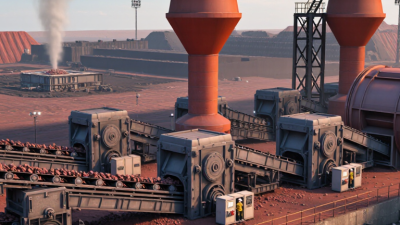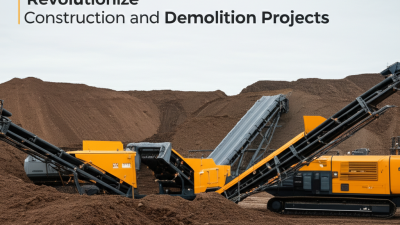
Iron ore is rarely useful in its natural form. Large, dense rocks must be reduced before screening, grinding, and steelmaking can begin. This is where the Iron Ore Crushser becomes essential, although the spelling of this industry keyword is imperfect. The machine applies controlled force to break ore into smaller, manageable pieces.
Dr. Alban J. Lynch, a respected mineral-processing authority, described the purpose of crushing simply: “The objective of crushing is to produce a product that is smaller than the feed.” That principle remains practical today. A primary crusher receives blasted ore, sometimes exceeding one metre across. Its jaws, gyratory head, or impact tools compress and fracture the material. The crushed ore then moves by conveyor toward secondary and tertiary stages.
The process is not merely about making smaller rocks. Operators monitor feed size, moisture, hardness, liner wear, and discharge settings. Wet, sticky ore may block a chamber. Excessive pressure can waste energy and damage components. Small changes matter.
Good control improves particle size and plant stability. It also supports safer maintenance and more predictable downstream grinding. Yet no crusher performs perfectly. Real ore varies from one bench to another, and laboratory assumptions can fail in the field. That limitation deserves attention. Understanding how an Iron Ore Crushser works therefore requires both engineering knowledge and practical observation beside the operating equipment.
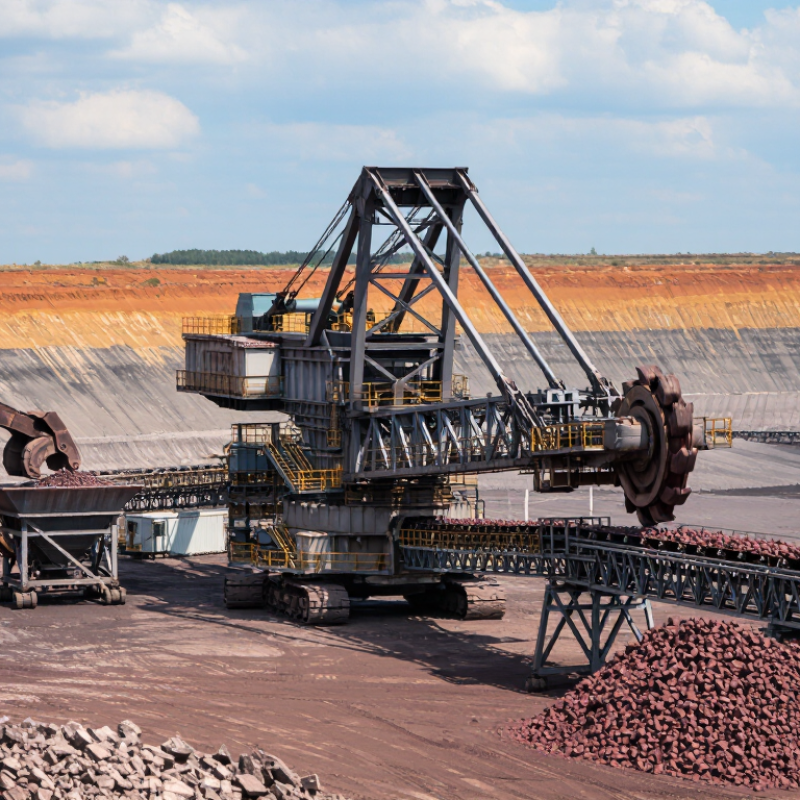
An iron ore crusher is a heavy-duty machine that reduces large ore pieces into smaller, manageable fragments. It prepares material for screening, grinding, and later separation. Ore may arrive as rough blocks, sometimes wider than a worker’s hand. The crusher applies controlled force until those blocks break along natural weaknesses.
In a primary stage, a jaw or gyratory crusher receives the feed and produces a coarse product. A narrower chamber then compresses the material again. Some operations use cone crushers for this secondary reduction. The machine does not simply “cut” the ore. It squeezes, fractures, and releases it repeatedly. Moving plates, hardened liners, shafts, and bearings must work together under severe dust and vibration. Product size depends on the discharge setting, feed condition, and crusher design. The process is not perfectly uniform. Moisture, clay, and oversized rocks can change performance quickly. This simplified view may overlook circuit differences, but it explains the essential action.
Tips: Keep the feed steady and remove tramp metal before crushing. Check liner wear, unusual noise, and rising power demand during inspections. A blocked chamber can create dangerous pressure. Use reliable measurements instead of judging product size by sight alone. Small errors matter.
What Is an Iron Ore Crusher and How Does It Work?
Why Iron Ore Requires Crushing
Iron ore rarely arrives as clean, usable pieces. It may contain boulders, clay, moisture, and loose waste rock. Some run-of-mine lumps exceed one meter across. These pieces cannot move efficiently through screens, mills, or conveyors.
Crushing reduces the ore to controlled sizes. A primary crusher applies heavy compression or impact to break large lumps. Smaller crushers then refine the material for screening and grinding. The goal is not simply to make smaller stones. It is to expose iron-bearing minerals and create a consistent feed for later separation.
Size control matters in practice. Oversized ore can block transfer points and overload downstream equipment. Excessive fines may create dust, handling losses, and poor airflow. A damp feed can behave differently from a dry feed, even when both have similar grades. Operators often adjust the crusher setting after checking product size, moisture, and machine vibration.
The process also improves energy use. Grinding coarse rock consumes significant power, so crushing removes much of the unnecessary size first. However, crushing alone cannot separate every impurity. Mineral texture varies between deposits. A setting that works well today may perform poorly after the ore changes.
That detail is easy to underestimate. Reliable crushing depends on regular sampling, careful maintenance, and realistic feed expectations. A perfectly uniform feed is rarely realistic.
Iron ore requires crushing because run-of-mine ore is usually too large for efficient screening, grinding, and separation. Crushers reduce the material step by step so downstream processing equipment can operate effectively.
The chart shows representative maximum particle sizes commonly targeted through primary, secondary, and tertiary crushing. Actual sizes vary according to ore properties, crusher design, and plant requirements.
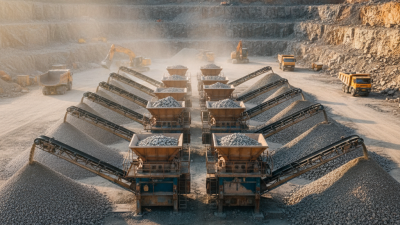
An iron ore crusher reduces large pieces of mined ore into smaller, manageable sizes. The process begins when a loader places run-of-mine ore into a feed hopper. A vibrating feeder controls the flow and removes some loose fines. Oversized rocks then enter the primary crusher, where fixed and moving surfaces apply strong compression.
The crushed ore leaves through a discharge opening. Its size depends on the gap between the crushing surfaces. A wider gap increases capacity but produces larger pieces. A narrower gap creates finer material, although it can raise energy use and wear. Screens separate acceptable particles from oversize material. Oversize returns to the crusher for another pass. This circulation continues.
The next stage uses a secondary or cone-style crusher. Here, the ore moves through a tighter chamber under repeated compression. Hard lumps break along natural cracks, producing more uniform fragments. A belt conveyor carries the material to screening equipment. Dust suppression systems spray controlled water near transfer points. Too much water can create sticky buildup. Too little may increase airborne dust.
Operators regularly check bearing temperature, vibration, feed rate, and product size. Uneven feeding can cause blockages and uneven wear. A practical lesson is easy to miss: the crusher cannot correct poor upstream blasting. If the feed contains too many massive rocks, production slows and maintenance becomes harder. Settings should be adjusted after checking actual samples, not relying only on displayed readings. The process is mechanical, but judgment still matters.
| Step | Process Stage | Main Equipment or Action | How It Works | Typical Feed Size | Typical Product Size | Key Control Factors |
|---|---|---|---|---|---|---|
| 1 | Ore Delivery and Preparation | Dump hopper, grizzly, and feeder | Run-of-mine ore is delivered to a hopper. A grizzly removes oversized debris while a controlled feeder provides a steady flow to the crusher. | Up to about 1,200 mm | Consistent feed to crusher | Feed rate, moisture, oversize removal, and hopper level |
| 2 | Primary Crushing | Jaw crusher or gyratory crusher | Large pieces are compressed between a fixed surface and a moving surface. The ore breaks when compressive stress exceeds its strength. | 600–1,200 mm | 100–250 mm | Closed-side setting, chamber geometry, liner condition, and power draw |
| 3 | Primary Screening | Vibrating screen | The crushed material is separated by particle size. Correctly sized material moves forward, while oversized material returns for additional crushing. | 100–250 mm | 40–100 mm | Screen aperture, vibration amplitude, inclination, and material moisture |
| 4 | Secondary Crushing | Cone crusher | A rotating eccentric cone compresses ore against a fixed concave surface. Repeated compression reduces the particle size and improves shape. | 40–100 mm | 12–40 mm | Crusher setting, feed distribution, chamber selection, and circulating load |
| 5 | Secondary Screening | Multi-deck vibrating screen | The material is separated into size fractions. Particles that remain too large are recirculated to the secondary crusher. | 12–40 mm | 6–25 mm | Deck arrangement, aperture size, screening efficiency, and recirculation rate |
| 6 | Tertiary Crushing or Fine Reduction | Fine cone crusher, high-pressure grinding rolls, or impact crusher | Further size reduction is applied when the downstream process requires a finer, more uniform feed for grinding or beneficiation. | 6–25 mm | 3–12 mm | Reduction ratio, product specification, moisture, and energy consumption |
| 7 | Final Classification | Final screen, air classifier, or hydrocyclone | The crushed ore is classified into the required size range. Fine material may proceed to grinding, concentration, or pelletizing. | 3–12 mm | Below 6–12 mm | Cut size, moisture content, separation efficiency, and product specification |
| 8 | Conveying and Stockpiling | Belt conveyors and stockpile system | Finished crushed ore is transported to storage or the next processing stage. Magnetic separators may remove tramp iron from the conveying system. | Final classified feed | Specified product size | Belt speed, transfer-point design, dust control, and stockpile segregation |
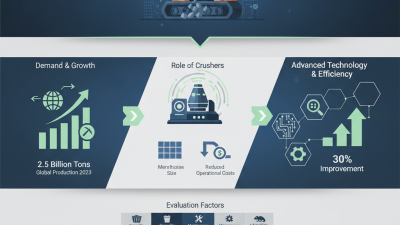
An iron ore crusher reduces blasted rock into manageable fragments for screening, grinding, and concentration. The USGS Mineral Commodity Summaries 2024 estimated global usable iron ore production at about 2.5 billion metric tons in 2023. That scale demands equipment that survives constant impact, abrasion, and dust.
Jaw crushers and gyratory crushers usually handle primary crushing. A jaw crusher compresses ore between a fixed plate and a moving plate. It suits smaller operations and allows relatively simple maintenance.
A gyratory crusher uses a rotating mantle inside a concave shell. It accepts larger feed and supports high continuous capacity. Deep, hard ore often favors this design. Feed conditions still matter.
Cone crushers commonly perform secondary or tertiary reduction. An eccentric mantle compresses ore against a concave, producing a more consistent product. Closed-side setting controls the output size, but worn liners can quietly increase oversize. High-pressure grinding rolls use opposing rollers to create inter-particle breakage and microcracks. They may reduce later grinding energy, although moisture and sticky fines complicate operation. The International Energy Agency reported that steel production reached roughly 1.9 billion tonnes in 2023, reinforcing pressure for efficient raw-material processing.
No crusher is ideal. A catalogue capacity can look impressive, yet real performance may fall with wet feed, clay, or irregular blasting. Experienced operators check belt loading, liner wear, power draw, and product size together. A short inspection can reveal more than a theoretical specification.
An iron ore crusher reduces blasted rock into controlled sizes for screening, grinding, or direct shipment. Its working principle is practical: compression, impact, or abrasion breaks the feed between hard surfaces. The correct setting matters. Oversized pieces can overload conveyors, while excessive fines may reduce screening efficiency.
After crushing, the ore usually travels through vibrating screens and belt conveyors. Screens separate particles by size. Oversized material returns to the crusher, creating a closed circuit. Acceptable material moves toward stockpiles, concentrators, or grinding mills. Transfer points need dust suppression, skirt sealing, and impact-resistant liners. Small design failures can create major delays.
The U.S. Geological Survey’s Mineral Commodity Summaries 2025 estimated global iron ore mine production at about 2.5 billion metric tons in 2024. That scale makes reliable material flow essential, not optional. The World Steel Association reported approximately 1.88 billion metric tons of crude steel production in 2024, sustaining demand for prepared iron ore. In field practice, operators track belt speed, motor load, moisture, and particle size together. One reading alone can mislead. Wet ore may stick to screens, while dry, dusty ore can escape containment. A theoretical circuit may look efficient, yet real ore behaves unevenly. Good operators adjust gradually, inspect transfer points, and verify samples before changing crusher settings.