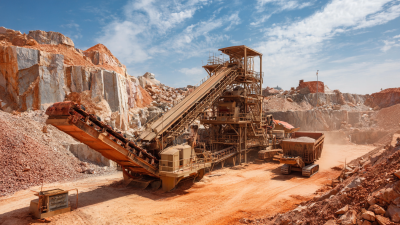
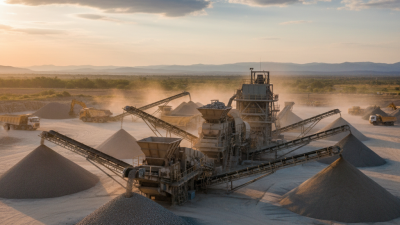
What Is a Quarry Crusher and How Does It Work?
A Quarry Crusher turns blasted or excavated rock into stone sizes used for roads, concrete, and other construction projects. The process looks simple from a distance. Rock enters a steel chamber, then emerges smaller. But the details matter.
Barry A. Wills, a respected mineral-processing author, provides a useful technical perspective. The following is a paraphrase of the principles in his work, not a direct quotation: “Effective crushing depends on matching the equipment to the material and the required product.” That match begins with the rock itself. Hard granite behaves differently from softer limestone. Feed size, moisture, and abrasiveness also affect performance. A jaw crusher often handles the first, coarse reduction. Cone or impact crushers may then refine the material, depending on the rock and product target. Screens separate sizes, while conveyors move material between stages. It is a system.
This guide explains what a Quarry Crusher does, how its main components work, and why crushing stages vary from site to site. It also looks at practical details, such as uneven feed, worn liners, and dust around transfer points. These are not minor issues; they can change output and maintenance needs. Real operations are rarely perfect. A clear process overview helps readers ask better questions, though equipment selection still depends on site conditions and qualified technical assessment.
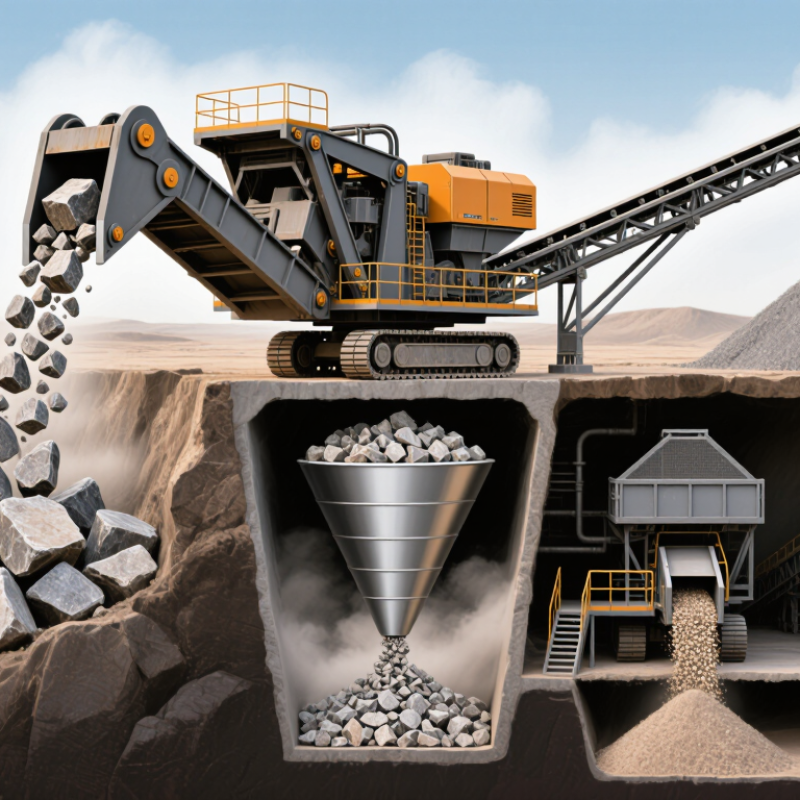
What a Quarry Crusher Is and Its Role in Aggregate Production
A quarry crusher is a machine that breaks extracted rock into smaller pieces for use as aggregate. Aggregate includes materials such as crushed stone and gravel used in concrete, road foundations, and drainage layers. The crusher’s role is not simply to make rock smaller. It helps produce pieces that fit a planned size range. That matters.
In a typical operation, large rocks move from the extraction area to a primary crusher. Jaw or gyratory crushers commonly handle this first reduction. Conveyors then carry the material to screens, which separate particles by size. Material that is still too large may return for another pass. The exact arrangement depends on the rock and the final product.
Crusher settings, screen openings, and feed rate all affect the result. Hard, abrasive stone can wear machine parts faster, while wet, clay-rich material may clog screens. Operators monitor output and adjust the process as conditions change. A setting that works on dry rock may perform poorly after rain. There is no universal recipe. Even careful adjustments involve trade-offs between throughput, product shape, and wear. For reliable production, crews check sample sizes and equipment condition rather than relying on a single figure.
The Main Components of a Quarry Crushing System
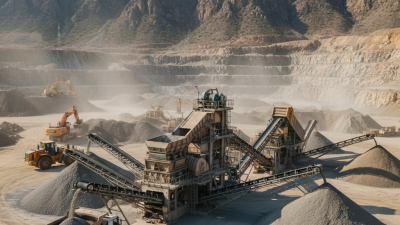
A quarry crushing system turns blasted rock into graded aggregate through several connected components. The feed hopper receives rock, while a grizzly separates fines before they reach the crusher. A vibrating feeder controls the flow. Dust matters.
The primary jaw crusher reduces large blocks into smaller pieces. A secondary cone or impact crusher shapes the material further, and screens sort it by size. Oversized pieces return for another pass. The USGS 2024 Mineral Commodity Summaries estimated U.S. crushed-stone output at about 1.5 billion short tons in 2023. It valued that output at roughly $24 billion. This scale helps explain why steady material flow and product sizing matter.
Conveyors move stone between stages and into stockpiles. Belt scales and control panels help operators monitor output, while guards and dust-suppression sprays address everyday operating hazards. Easy to miss. One weak assumption is that every quarry follows this same layout. Rock hardness, moisture, and the required product sizes can change equipment choices and settings. A screen may also send more material back for crushing than expected, slowing the whole circuit. Operators need to watch the actual feed, not just trust the planned process.
How Material Moves Through the Crushing Process
A quarry crusher processes rock in stages, and the material’s route matters as much as the machine itself. Trucks tip blasted stone into a hopper. A vibrating feeder meters the flow into a primary crusher, often a jaw crusher. Large pieces break into smaller fragments. The crushed rock then drops onto a conveyor and travels to the next stage.
At the secondary crusher, more reduction brings the stone closer to its target size. A screen sorts the material by particle size. Properly sized rock moves to stockpiles; larger pieces return for another pass. The path is not perfectly smooth. Wet or clay-coated feed can clog screens, while uneven feeding can strain equipment. Operators watch the material flow, listen for changes, and adjust settings when needed. Small changes can affect the final product.
Tips: Keep feed steady. Check screens for buildup. Look at the finished stone regularly; measurements help, but they do not show every change in shape or texture.
Common Crusher Types and Their Crushing Stages
Quarry crushing usually happens in stages, because one machine rarely turns blasted rock into usable aggregate efficiently. Feed size matters. A jaw crusher often handles the primary stage, gripping large, uneven blocks between a fixed plate and a moving jaw. At a dusty feed hopper, operators watch for bridging and sudden surges; poor feeding can waste capacity. Simple, but not effortless.
Secondary crushing reduces the coarse stone further. Cone crushers commonly use compression, while impact crushers break material with fast-moving blow bars. Choice depends on rock hardness, abrasiveness, desired shape, and maintenance needs. Hard, abrasive stone can wear impact parts quickly. That detail gets missed. Screen decks separate sizes, sending oversize material back for another pass and routing suitable stone onward. Closed circuits improve control, though recirculating loads can rise when screens blind or feed becomes damp.
Some plants use a gyratory crusher for high-volume primary work, especially where steady throughput is essential. Others rely on jaw units because they are adaptable and relatively straightforward to inspect. Not every quarry follows the same sequence. Rock varies, and so does the target product. Crusher gap settings influence output size, but they cannot correct poor blasting or inconsistent feed. Measurements matter more than guesswork. Even a tidy flow sheet can behave differently after rain.
What Is a Quarry Crusher and How Does It Work? - Common Crusher Types and Their Crushing Stages
| Crushing Stage |
Common Crusher Type |
How It Works |
Typical Feed Size |
Typical Reduction Ratio |
Typical Product Size |
Common Role in a Quarry |
| Primary |
Jaw crusher |
A fixed jaw and a moving jaw compress rock until it fractures. The crushed material exits through the adjustable gap at the bottom. |
Up to about 1,000 mm, depending on the machine and rock |
About 4:1 to 8:1 |
Approximately 100–300 mm |
Accepts blasted or extracted rock and reduces it to a size suitable for further processing. |
| Primary |
Gyratory crusher |
A gyrating central crushing head compresses rock against a stationary outer shell. Continuous crushing makes it suitable for high-capacity operations. |
Often several hundred millimetres; capacity and maximum feed depend on the design |
About 4:1 to 8:1 |
Typically around 100–250 mm |
Used for primary crushing where large, steady flows of hard rock need to be processed. |
| Secondary |
Cone crusher |
A rotating mantle compresses rock against a concave liner. The material is crushed repeatedly as it moves through the chamber. |
Commonly around 50–250 mm |
About 3:1 to 6:1 |
Approximately 20–75 mm |
Reduces primary-crusher output and produces a more controlled feed for screening or further crushing. |
| Primary or secondary |
Impact crusher |
Fast-moving blow bars strike the rock and throw it against impact plates, breaking it through repeated impact. |
Often up to about 500–800 mm, depending on the crusher and material |
About 10:1 to 20:1 |
Approximately 20–150 mm |
Commonly processes softer or moderately hard stone and can produce a relatively cubical product. |
| Tertiary |
Cone crusher |
Uses compression in a narrower setting to further reduce screened material and control the final product grading. |
Commonly around 20–75 mm |
About 3:1 to 5:1 |
Approximately 5–25 mm |
Produces smaller aggregate sizes after secondary crushing. |
| Tertiary or final shaping |
Vertical shaft impact (VSI) crusher |
A high-speed rotor accelerates rock against rock or impact surfaces, breaking particles and improving their shape. |
Usually up to about 50–60 mm, depending on the feed arrangement |
About 2:1 to 5:1 |
Often below 20 mm |
Used for fine crushing, particle shaping, and producing manufactured sand from suitable feed. |
How the stages work together: A quarry crusher reduces extracted rock in successive stages. Screens separate material by size; oversize material may return to a crusher, while correctly sized material moves to stockpiles or further processing. Feed limits, reduction ratios, and product sizes vary with rock properties, crusher settings, and equipment design.
How Operators Control Output Size and Production Flow
A quarry crusher reduces blasted rock into pieces that can be screened for different uses. Operators control output size by adjusting the crusher’s closed-side setting, which changes the gap between crushing surfaces. A tighter gap usually produces smaller material, but it can also reduce throughput and increase wear. Feed consistency matters too. Oversized rocks, sudden surges, or wet, sticky material can disrupt the flow and create uneven product.
Tips: Keep the feed steady and centered. Check screen openings and inspect wear parts regularly. Small changes matter.
Operators often use screens to separate finished material from oversize rock. The oversize returns to the crusher, while acceptable pieces move to stockpiles or the next process. If the return loop grows, production can slow even when the crusher sounds busy. Watch the trend. Compare belt scale readings, screen performance, and product samples rather than relying on sound alone. The right setting depends on rock hardness, moisture, and the required product. A setting that works in the morning may not suit a wetter feed later. Operators sometimes have to adjust by trial and measurement; that is useful, but it also means one reading should not be treated as a permanent answer.
Quarry Crusher Output Size by Crushing Stage
Typical product-size ranges illustrate how crushing stages progressively reduce rock size.
Operators influence output by adjusting crusher settings and managing feed rate and screen recirculation. Actual product gradation varies with rock properties, feed size, equipment, and circuit setup.